Українська
  Русский
  Polski
  Deutsch
  Français
  Español
  Nederlands
  Svenska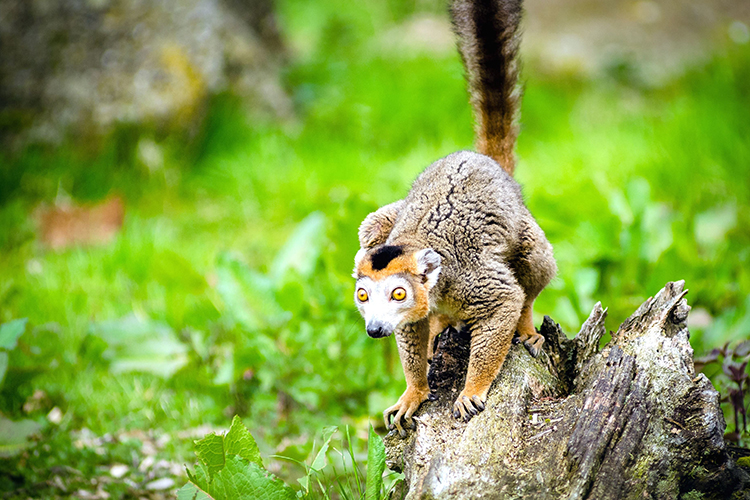
Lemurs are among the most unusual primates on the planet. These animals live only on the island of Madagascar, turning it into a true laboratory of evolution. Over millions of years of isolation, lemurs have occupied nearly all the ecological niches that, on other continents, belong to monkeys. Let’s find out what makes these animals so special and dispel a few common myths.
Why Do Lemurs Live Only on Madagascar?
About 50 million years ago, the ancestors of modern lemurs made an incredible journey. They crossed the Mozambique Channel from Africa to the island of Madagascar, most likely on natural rafts of vegetation carried out to sea by a storm. This voyage of roughly 400 km took about a month, and at that time the ocean currents flowed in the right direction.
Once on the island, the lemurs found themselves in a unique situation. Madagascar had split from Africa long before the appearance of more advanced primates—monkeys. Therefore, there were no competitors on the island, and lemurs were able to evolve into many different forms, filling all available ecological niches.
In the rest of the world, prosimians (to which lemurs belong) were almost completely displaced by more advanced primates. But on Madagascar, thanks to isolation, they thrived and continue to evolve even today—recent studies have shown that new lemur species are still appearing.
How Many Species of Lemurs Exist?
The number of known lemur species is growing rapidly. In 1999, scientists recognized about 31 species. By 2008, that number had risen to nearly 100. Today, science knows of 108–112 lemur species, and the list continues to expand.
The diversity of mouse lemurs—the smallest primates in the world—is especially impressive. In 1992, only two species were known, and now there are more than 24. New species are discovered almost every year using modern genetic methods.
Sizes among lemurs range from tiny to quite large. The smallest lemur—Madame Berthe’s mouse lemur—weighs only about 30 g with a body length of about 9–10 cm. It is also the smallest primate on the planet. By contrast, the largest living lemur—the indri—reaches 7–9 kg and is about the size of a small dog. And in the past the island hosted truly giant lemurs: for example, Archaeoindris weighed almost as much as a gorilla (about 160–200 kg), but all of them went extinct after humans arrived.
Fun Fact
The word “lemur” reflects the mysterious nature of these animals. In Latin, lemures means “spirits of the night” or “ghosts”—that’s what Europeans called the strange creatures whose eyes shone in the dark and whose cries frightened the first seafarers to Madagascar at night. Many lemurs are indeed nocturnal, and their silent movement through the canopy and otherworldly sounds easily invited comparisons with apparitions.
Most lemurs are arboreal, excellent at climbing and leaping among branches. But there are more terrestrial species as well. They also differ in activity patterns: many lemurs are nocturnal, feeding after dark on night-active insects, flowers, and fruits. Others, by contrast, are diurnal—rare among prosimians.
Some lemurs live in pairs, others are solitary, and several species (especially diurnal ones) form large social groups. For example, the ring-tailed lemur forms troops of up to 30 individuals and spends much time on the ground. We’ll describe it in more detail below.
Ring-Tailed Lemur: The Star of Madagascar
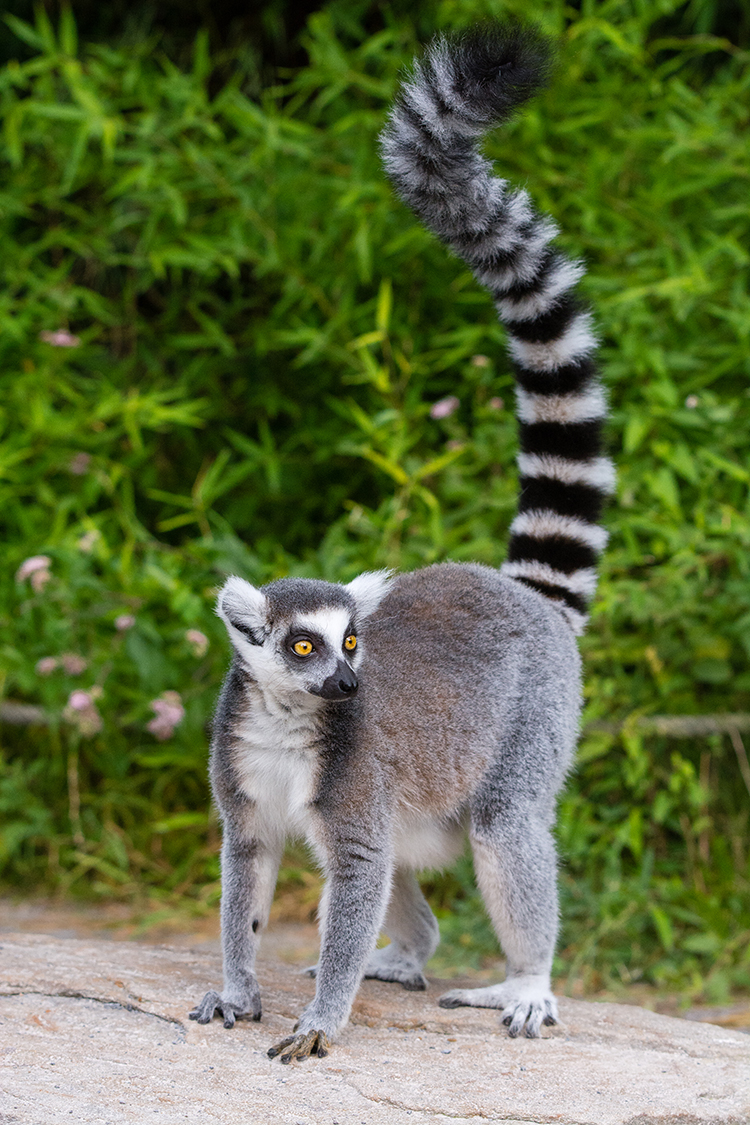
The ring-tailed lemur, or catta (its Malagasy name is “maki”), became a real star thanks to the animated film “Madagascar,” which featured the character King Julien. It is indeed the most recognizable and best-studied lemur species.
Appearance and Size
The ring-tailed lemur is about the size of a house cat. Its body length is around 40 cm, plus a tail that is just as long or even longer (up to ~60 cm). The tail is bushy, with alternating black and white rings (about 25 in total), and it always ends with a black tip.
An adult weighs roughly 2–3 kg. A notable share of the mass is in the tail. Despite their fluffiness, they are remarkably light and agile.
The Tail: A Multifunctional Tool
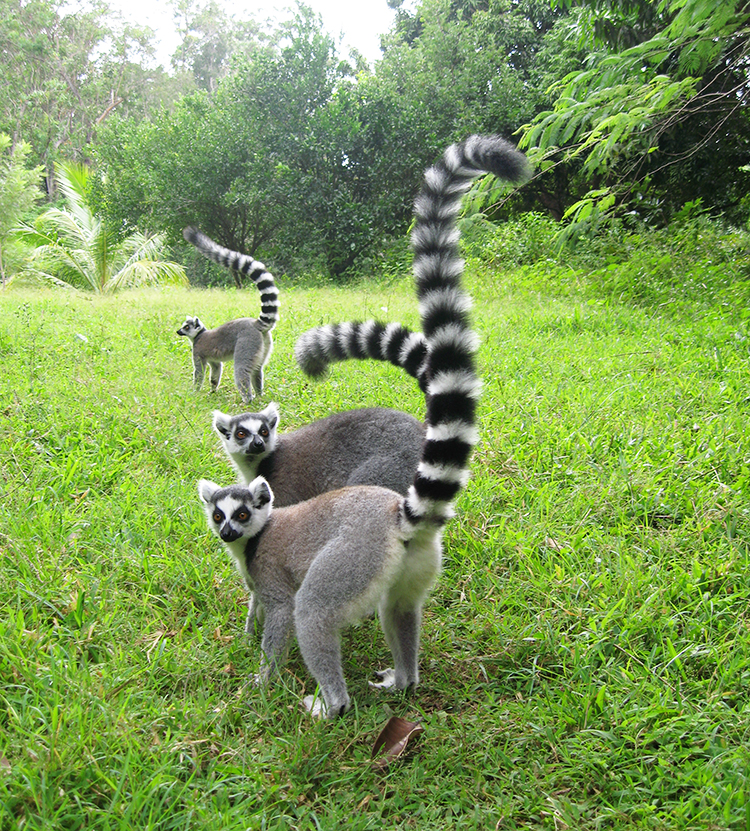
The long, banded tail helps ring-tailed lemurs keep their balance when leaping and when perched on thin branches. But that’s not all—the tail plays an important role in communication. When a lemur walks on the ground, it holds the tail upright so other group members can easily spot it in the grass.
Fun Fact
Males have a remarkable way to settle disputes without fighting. They rub the tail with secretions from special wrist glands and point it toward a rival, staging so-called “stink fights.” The one with the stronger scent wins the dispute over rank in the social hierarchy.
Ground Travelers
Unlike most other lemurs, ring-tailed lemurs spend a lot of time on the ground—about 30–50% of their time. This is an adaptation to the arid regions of southern Madagascar, where trees grow far apart.
Social Life
Ring-tailed lemurs are highly social. They live in groups of 6 to 30 individuals, with an average of 13–15. The group has a strict hierarchy, and—remarkably—females rule: all females dominate all males, with priority access to food and mates.
Females usually remain in their natal group for life, while males transfer between groups several times over their lifetime. A family group’s home range covers 6 to 35 hectares, depending on the region and food availability.
Offspring and Lifespan
A female usually gives birth to a single infant, though twins are fairly common, especially when food is abundant. For the first few months the mother carries the baby on her belly; later it moves to her back. By 5–6 months the youngster becomes independent.
In the wild, ring-tailed lemurs rarely live longer than 16 years, though one individual in the Berenty Reserve lived a full 20 years. In captivity, with good care, the record is 27 years.
What Do Lemurs Eat?
Their diet is based on fruit, especially tamarind pods. They also eat leaves, flowers, bark, plant sap, grasses, and other plant parts. Sometimes they diversify the menu with insects and even small vertebrates—birds and chameleons. Ring-tailed lemurs are true opportunists that eat whatever they can find in their arid habitat.
Morning Yoga Under the Sun
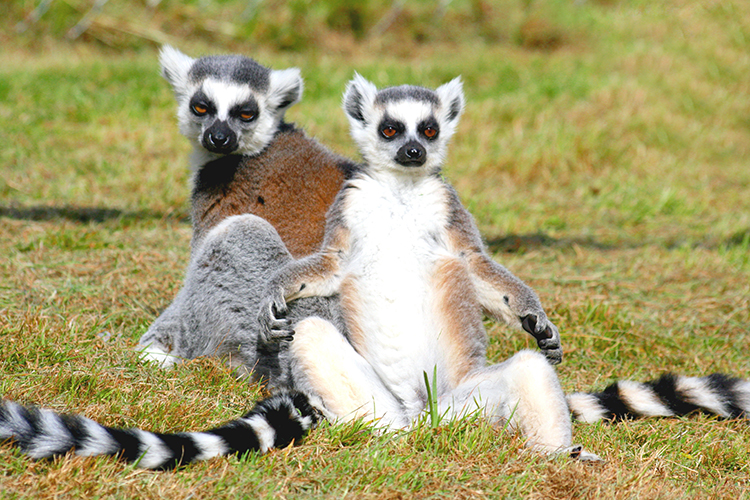
One of the most charming sights is the ring-tailed lemurs’ morning sunbathing. After a cold night, they sit together in a sunny clearing, spread their arms to the sides, and turn their bellies toward the sun. This pose really does resemble yoga! That’s how they warm up, exposing the white fur on their bellies, which absorbs heat better.
Debunking Myths About Lemurs
For a long time, lemurs were shrouded in mystery, so many myths formed around them. The isolation of Madagascar helped spread misconceptions, and many facts about lemurs became known to science only in recent decades. Now we’ll debunk a couple of common myths about lemurs.
The Myth of Right- and Left-Handedness
Until recently, it was believed that only humans could be right- or left-handed. However, a 1988 study refuted that belief.
Scientists studied 33 black lemurs in captivity, observing which hand they used to take food. The results were surprising: 20 individuals were left-handed, 12 predominantly used the right hand, and only one used both equally well.
Interestingly, younger lemurs were more often left-handed, while older animals tended toward right-handedness.
This study showed that a preference for one hand exists not only in humans but also in our distant relatives—the lemurs.
The Myth of Gliding Sifakas
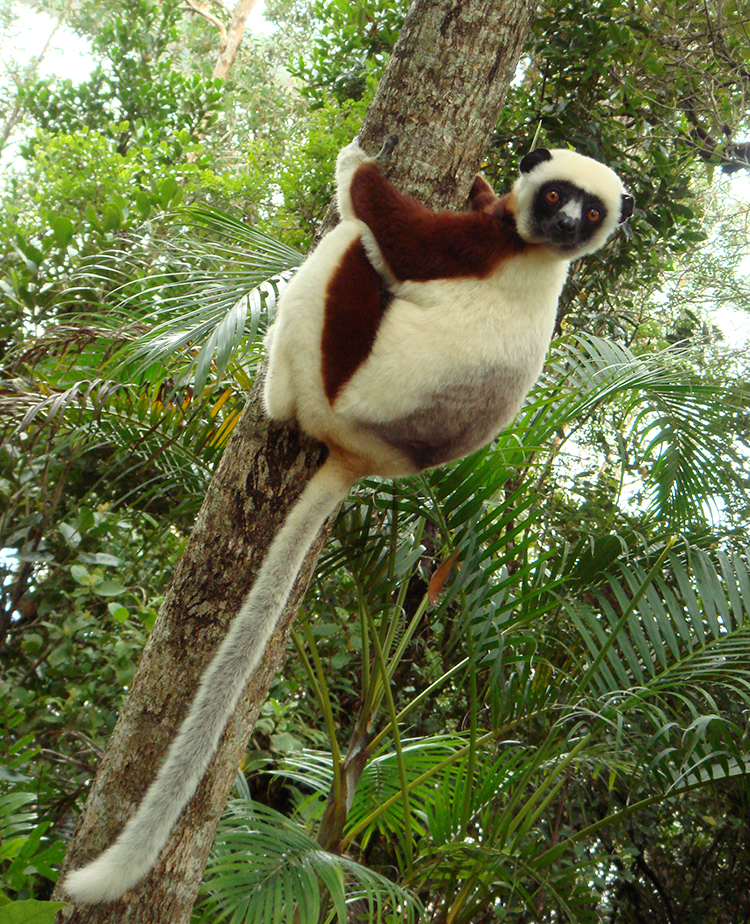
One type of lemur—among the most monkey-like—is the sifaka. Sifakas are remarkable jumpers. Some zoologists once suggested that during a leap a sifaka glides by stretching a skin fold between the forelimbs and chest like a sail.
Modern research, however, has refuted true gliding in lemurs. Sifakas lack full-fledged patagia like bats or flying squirrels. Their small skin folds are more a byproduct of body structure that can create a minor aerodynamic effect and help control a leap.
Biomechanical analyses of leaps show that the aerodynamic effect is small: a sifaka’s trajectory is essentially ballistic, governed by the physics of an ordinary jump under gravity. In other words, a sifaka cannot travel farther than its legs propel it. Their spectacular distances are due solely to the powerful musculature of the hind limbs. At takeoff, a sifaka generates high horizontal speed, so it covers long gaps even without gliding.
Fun Fact
Sifakas can clear up to 9–10 meters between trees and move strikingly on the ground with lateral hops on their hind legs, arms outstretched—hence the nickname “dancing lemurs.”
Amazing Discoveries of Recent Years
Lemurs Age Without Inflammation
In 2025, scientists made a striking discovery: ring-tailed lemurs and sifakas age without chronic inflammation. In humans and most other mammals, aging brings chronic inflammation linked to heart disease, diabetes, cancer, and osteoarthritis. Lemurs break that rule!
In ring-tailed lemurs, inflammation even declines with age—the exact opposite of humans. This finding may reshape our understanding of human aging and help develop ways to extend healthy lifespan.
Brain Size Does Not Determine Intelligence
A mouse lemur’s brain weighs only 2 grams—about 200 times less than an orangutan’s. Yet a 2020 study showed that lemurs handle many cognitive tasks as well as monkeys and great apes. In some tests of understanding other minds, lemurs even outperformed great apes.
Moreover, a 2023 study on wild mouse lemurs found that the more intelligent individuals live longer. This is one of the first examples of a link between intelligence and lifespan in wild animals.
New Lemur Species Are Emerging Even Now
A 2025 study confirmed that despite 50 million years of evolution, lemurs continue actively forming new species. The speciation rate is especially high in mouse lemurs, sportive lemurs, and brown lemurs. Lemur evolution has not slowed—it is in full swing!
Why Lemurs Matter to All of Us
Lemurs are not just cute animals with big eyes. They represent 15% of all primate species worldwide—and they all evolved on a single island. This makes Madagascar a unique evolutionary laboratory.
Studying lemurs helps us understand aging, intelligence, and social behavior. Their research could lead to medical breakthroughs—from combating age-related diseases to developing “synthetic hibernation” for space travel.
Most importantly, lemurs are indicators of the health of Madagascar’s unique ecosystems. Saving lemurs means preserving forests that provide clean water, food, and livelihoods for millions of people.