Українська
  Русский
  Polski
  Deutsch
  Français
  Español
  Nederlands
  Svenska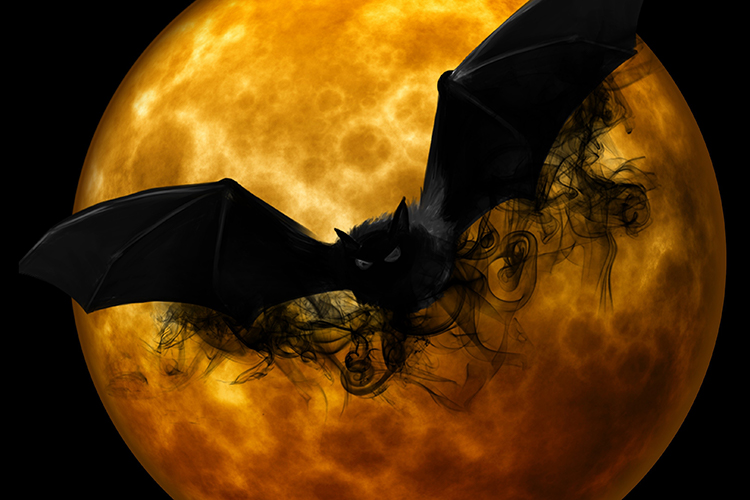
Bats are among the most mysterious and misunderstood creatures on our planet. These nocturnal winged mammals have roamed Earth’s skies for tens of millions of years. According to paleontologists, modern bats closely resemble their ancient ancestors that flew over 50 million years ago. Yet over the centuries, bats have come to be viewed in the public imagination as eerie and ominous beings.
Horror films and literature have cemented their image as “creatures of the night.” Think of the classic Dracula who transforms into a bat, or countless vampire movies where a shadowy figure bursts from the darkness, wings flapping. As a result, many people still believe that bats drink blood, attack humans, and possess mystical “vampire” powers.
In reality, most beliefs about bats are nothing more than myths. In this article, we’ll explore the most common ones.
Myth 1: Bats are rats with wings
One of the most widespread misconceptions is that bats are related to mice or other rodents. In fact, their closest relatives — surprisingly — are primates, the group that includes humans.
Myth 2: Bats are blind
A popular myth claims that bats can barely see and fly around “blindly.” This is simply not true. These animals have good vision — especially so-called “flying foxes,” whose eyesight is ten times sharper than a human’s. But their greatest superpower is echolocation. By emitting ultrasonic signals and detecting their echoes, bats can “see” with astonishing precision, even in total darkness. They’re able to detect tiny objects like insects in the air or ripples on water caused by fish.
This phenomenon was first studied in the 18th century by Italian scientist Lazzaro Spallanzani. In the 20th century, American researchers Donald Griffin and Robert Galambos confirmed that many bat species navigate not by sight but by echolocation — much like modern submarines.
Myth 3: All bats drink blood
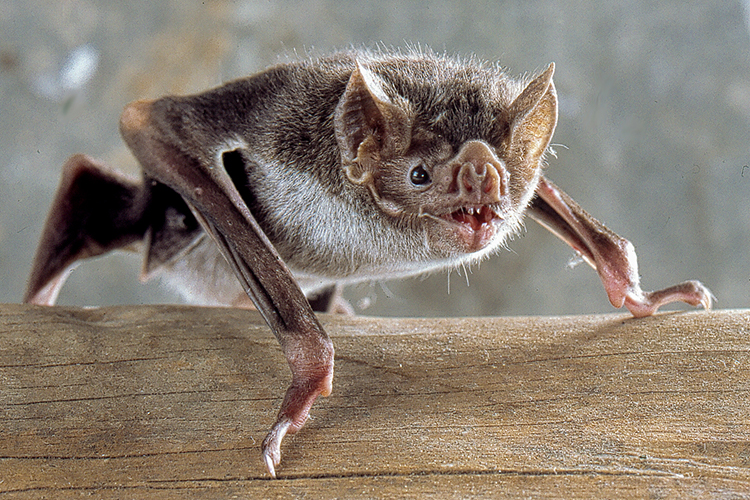
Of the more than 1,400 bat species, only three actually feed on blood. These are the so-called true vampires (desmodontines) that live in the tropical regions of the Americas. They’re small, weighing about 30 grams, and don’t swoop down from the sky like in movies. Instead, they sneak up on animals from the ground. The vampire makes a shallow cut and laps up the blood. Its saliva contains a painkiller and an anticoagulant, so the victim doesn’t feel the bite and the blood flows freely.
Even these vampires rarely bite humans and are easily tamed in captivity. All other bat species feed on insects, fruits, nectar, or even small animals — and have no interest in blood.
Myth 4: Bats can fly into your hair
This is a persistent folk belief, but it doesn’t reflect reality. Their echolocation is so precise that it allows them to detect and avoid even thin wire in complete darkness. For comparison: a human hair is about 0.1 mm thick. That’s nearly invisible to us, yet a bat’s sonar can pick it up. They can also detect tiny insects like mosquitoes. The chance of a bat not noticing a human head in its path is virtually zero — it’s a large object that the bat can easily identify and avoid.
In reality, when it seems like a bat is flying straight for your face or hair, what’s usually happening is this: the bat is chasing insects that are flying around a person (like mosquitoes or gnats near a streetlamp) and might swoop in quite close. The fast, darting motion of a small shadow near your head can be startling — hence the myth that “it almost flew into my hair.” But in truth, the bat was going after its prey and always dodges at the last moment.
Why do bats hang upside down?
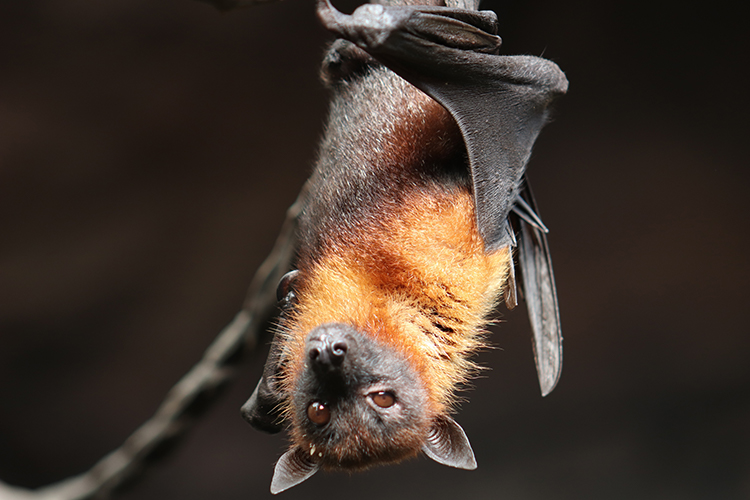
One of the most striking peculiarities of bats is their resting posture: hanging upside down. Nearly all bats sleep and rest by hanging from their back feet, often gathered in clusters beneath cave ceilings or rooftops. This looks unusual to us, so it naturally raises questions. But it’s not strange at all — it’s an evolutionary necessity.
First, bats need to take off from a height. Unlike birds, which can flap their wings and lift off from the ground, the body structure of bats doesn’t allow them to launch from flat surfaces easily. Their wings are delicate membranes that can’t generate a strong lift right away, and their hind legs are too weak for standing or walking. Hanging upside down lets them take off instantly — they simply let go and glide forward.
Second, hanging upside down allows bats to occupy safe shelters that are inaccessible to most predators. After all, few animals can reach the roof of a cave or the tip of a tree branch. Bats hanging high up are well protected from most threats.
Finally, the anatomy of bats is perfectly adapted for hanging. If a human or another animal tries to hang upside down, their muscles quickly become strained — they can't stay like that for long. But a bat can sleep effortlessly while clinging to a ledge with its claws. The secret lies in the unique structure of their feet and tendons: when a bat folds its wings and relaxes, the claws on its hind legs automatically contract and grip the surface tightly. It doesn’t need to exert energy to hang — its ligaments and tendons lock the position. It’s like a “natural carabiner”: latch on and hang. So effective that even after death, a bat’s body can remain hanging for a while until it’s dislodged by the wind or another bat.
How do bats benefit us?
At first glance, these creatures might seem useless or even unpleasant neighbors to humans. But scientists and environmentalists say otherwise: bats play a vital role in nature and for humans. Here are a few examples.
- Pest control. The greatest benefit bats provide is to agriculture and ecosystems by consuming vast numbers of harmful insects. Insectivorous species (which are the majority) eat hundreds or even thousands of insects per night per individual.
- Pollination. Hundreds of tropical bat species feed on flower nectar, pollen, and fruits. These winged “gardeners” play a major role in pollinating plants and dispersing seeds. According to biologists, more than 500 plant species worldwide are pollinated specifically by bats. Among them are important crops like various types of bananas, mangoes, guavas, figs, cashews, avocados, and the famous agave — the plant used to make tequila.
- Seed dispersal. Fruit-eating bats carry seeds over long distances, helping ecosystems regenerate and spread. This is especially important in tropical jungles, where bats play a major role in forest renewal.
- Contribution to science and medicine. Bats are of great interest to scientists, and for good reason. By studying their unique immune systems, biologists are trying to understand how these animals carry viruses without getting sick themselves (bats are natural carriers of some viruses, including coronaviruses and rabies, but rarely suffer from them). Their echolocation ability inspired engineers to develop advanced sonar and navigation systems — ultrasound technologies evolved largely thanks to discoveries by cave biologists. As mentioned earlier, a substance from vampire bat saliva — draculin — is being tested as a potential treatment for thrombosis.
Interesting facts about bats
- In a cave in northern Mexico, 2 million baby bats live simultaneously. Despite the massive crowd, each mother finds her pup by scent and sound.
- In Texas (USA), Bracken Cave is home to a colony of Mexican free-tailed bats numbering up to 20 million. Scientists estimate that this colony consumes around 250 tons of insects each day. During the summer, bats in Texas alone destroy tens of thousands of tons of insects, including many agricultural pests. This helps farmers save billions of dollars on pesticides and protects their crops.
- On the island of Curaçao in the Caribbean, nearly all bats were wiped out by people in the mid-20th century. Afterward, botanists recorded a sharp drop in the yield of certain cactus species: one produced 90% fewer fruits, and another stopped fruiting altogether. It turned out that these cacti were exclusively pollinated by bats. Their disappearance affected not only the plants but the entire island ecosystem — the fruits were an important food source for birds and terrestrial animals during the dry season. This case clearly demonstrated the close link between bats and ecosystem health. Today, Curaçao is taking steps to protect and reintroduce bats, recognizing their importance.
- Some bat species make incredibly long migrations. For example, the southern Australian bent-wing bat can fly up to 150 kilometers in a single night searching for food — despite being only about the size of a matchbox.
- The Brazilian free-tailed bat (Tadarida brasiliensis) is considered the fastest mammal in level flight, reaching speeds over 160 km/h.
- Bats have an extremely fast metabolism. For instance, the shrew-like long-tongued bat (Glossophaga soricina) can digest fruits and nectar in just 20 minutes, helping it maintain high energy for sustained flight.
- Bats inhabit almost every corner of the globe, except for some remote islands and polar regions. With over 1,400 species, they are the second-largest order of mammals after rodents.
Bats are not monsters from horror stories — they are valuable and complex creatures, without which our planet’s ecosystems could fall out of balance. They pose no threat to humans and provide tremendous benefits.