Українська
  Русский
  Polski
  Deutsch
  Français
  Español
  Nederlands
  Svenska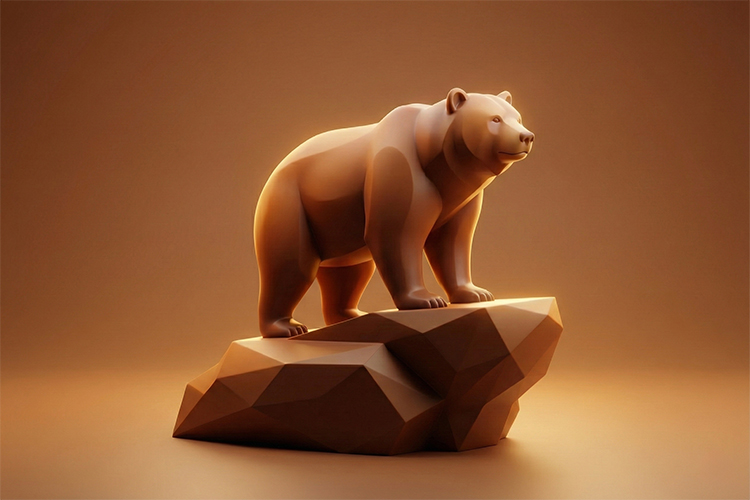
© Factum-Info
If it seems to you that the world is tailored to your rhythm, you are likely right. Office hours from nine to six, lunch breaks at noon, and evening news were created by and for those who live in the rhythm of the “solar” chronotype. According to Dr. Michael Breus’s classification, about 50% of the planet’s population belongs to the Bear chronotype.
Bears are the foundation of society. While Lions are already finishing their tasks and Wolves are just waking up, Bears methodically and confidently turn the wheels of the global economy. However, even this “standard” type has its pitfalls, especially regarding energy and sleep quality.
Determine your chronotype with our quiz
Biological Foundation: In the Rhythm of Daylight
The biology of a Bear is an ode to the sun. Their internal clock is perfectly synchronized with the Earth’s rotation. Unlike Lions, whose cortisol skyrockets before dawn, or Wolves, for whom this process is delayed until evening, Bears wake up together with the first rays.
- Circadian rhythm: Bears have the most “correct” hormone release schedule. Cortisol levels begin to rise smoothly with the dawn, reaching a peak by 10 a.m. Melatonin begins to be produced shortly after sunset, preparing the body for deep rest.
- Sleep drive: Bears have a very high need for quality sleep. It is critically important for them to sleep at least 8 hours. In contrast to “short-sleeping” Lions, a Bear who has not gotten their quota will feel like they are in a thick fog the next day.
Genetically, this type is closest to the natural rhythm of ancestors. While Lions are defined by a specific mutation of the PER3 gene, Bears possess the most balanced genetic set, which allows them to be maximally effective precisely during daylight hours.
Psychological Portrait: The Social Engine
Bears are often called the “glue” that holds teams and families together. These are people oriented toward communication and stability.
Key Personality Traits of the Bear:
- Extraversion and friendliness: They easily find common ground with others and prefer to work in a team.
- Caution and reliability: Bears rarely take unjustified risks. They prefer proven methods and see things through to the end.
- Conflict avoidance: They are comfortable in a harmonious environment, so they often act as peacemakers.
The main psychological trap for a Bear is the “afternoon slump.” Around 2:00 p.m.–3:00 p.m., a Bear’s energy drops so sharply that they often try to save themselves with an excess of caffeine or sugar, which ultimately only ruins their evening sleep and metabolism.

Evolutionary Heritage: The Main Hunters and Gatherers
From an evolutionary perspective, Bears were the main force of the tribe. While Lions guarded the camp at dawn and Wolves at night, Bears performed the main work during daylight: they hunted, built dwellings, and gathered supplies.
Their body is adapted to high activity under direct sunlight. That is why Bears today feel best in offices with large windows or working outdoors. The lack of natural light for them is a direct path to chronic fatigue.
Bears in Relationships: Finding a Common Rhythm
Since Bears make up half the population, they most often find a partner among “their own.” This is a big plus: partners’ sleep rhythms, meal times, and levels of social activity coincide. However, it is important for Bears to remember their peculiarities in their intimate life.
Unlike most people who habitually leave intimacy for the late evening, Bears should reconsider this approach. By 10:30 p.m., a Bear is already too exhausted for full-fledged intimacy.
Michael Breus recommends that representatives of this type plan intimate closeness for the morning time (around 7:00 a.m.) or early evening. In the morning, the hormone levels of this type are at their peak, which makes these moments more emotional and higher quality.
Nutrition and Sports: Fighting the “Sugar Rollercoaster”
For a Bear, metabolism is a question of conscious balance. Representatives of this type are more prone to weight gain than others, as their body is tuned to store energy. To avoid “sugar rollercoasters” and evening overeating, it is important to reconsider the approach to lunch and dinner.
Lunch should be the lightest meal. If a Bear eats a portion of pasta or a heavy meat steak at noon, their energy will drop to a critical level by 2:00 p.m. The ideal choice is vegetable soup, or a salad with chicken or fish.
Bears should plan dinner for 7:30 p.m. – 8:00 p.m. This should be a balanced meal (for example, protein and complex carbohydrates) that will provide a feeling of satiety until sleep. If a Bear has dinner too early (at 6:00 p.m.), the risk of breaking down into night snacks increases manifold.
Sports for a Bear are not just about muscles, but a way to manage alertness. The ideal time for a workout is 6:00 p.m. During this period, body temperature reaches its peak, and physical activity helps “wake up” for evening socializing.
If you feel an overwhelming desire to sleep at 3:00 p.m., try replacing coffee with a 10-minute intense walk or a series of squats—this will give the body a much higher quality impulse.

The Ideal Daily Schedule for a Bear
To live in harmony with their nature, a Bear should stick to the following schedule:
- 7:00 a.m. – 7:30 a.m.: Wake up. It is recommended to lie in bed a bit and stretch, allowing the body to smoothly exit sleep.
- 7:30 a.m. – 9:00 a.m.: Smooth start. Time for breakfast, light activity, and tuning in to the working mood.
- 10:00 a.m. – 12:00 p.m.: Peak productivity. Your “golden hours” for the most complex, creative, or analytical work.
- 12:00 p.m. – 1:00 p.m.: Early lunch. Helps avoid a sharp drop in sugar later.
- 1:00 p.m. – 3:00 p.m.: Social peak. The best time for meetings, calls, and negotiations—your social intelligence is at its maximum now.
- 3:00 p.m. – 4:00 p.m.: Energy slump. Engage in routine tasks or go for a short walk to defeat drowsiness.
- 6:00 p.m.: Sports. Time for a full workout or active movement.
- 8:00 p.m.: Balanced dinner. A combination of protein and complex carbohydrates to prevent night snacks.
- 11:00 p.m.: Bedtime. It is important for a Bear to sleep at least 8 hours, so try not to stay up past midnight.
Interesting Facts About Bears
- Social jet lag. Bears suffer from the disruption of their usual schedule on weekends more often than others. By trying to catch up on sleep for the week and getting up at 11 a.m. on Saturday, they knock off their clear solar rhythm, making Monday morning a real disaster for them.
- Coffee pause. The ideal time for coffee for a Bear is between 9:30 a.m. and 11:30 a.m. At this time, cortisol levels begin to smoothly decline after the morning peak, and caffeine gently maintains alertness without causing “burnout.”
- Dependence on the season. Bears are the most seasonal chronotype. In winter, when the daylight hours are shorter, their productivity drops naturally. They need more time for sleep in the cold season, and this is absolutely normal.
- Kings of deep sleep. Bears, as a rule, have the most stable sleep structure with pronounced phases of deep recovery. If a Bear sleeps in darkness and silence, their immunity recovers faster than that of any other type.
- The snack trap. It is Bears who are most often prone to “unconscious” eating of sweets during the daily energy slump. Replacing cookies with a short walk under the sun can radically improve their health.
- Sensitivity to light. For a Bear, “blue light” from smartphone screens before bed is the most dangerous enemy. Their melatonin is extremely sensitive to radiation, so gadgets should be banned an hour before sleep; otherwise, the deep sleep phase may be cut in half.
The Power of the Bear: How to Use Your Rhythm to the Max
Being a Bear means being synchronized with the rhythm of the planet itself. Your main strength lies in stability and the ability to maintain high productivity throughout the daylight hours. You are the ones who complete projects, build relationships, and create the foundation for the success of any endeavor.
If you recognized yourself in this description, stop fighting daytime fatigue with sugar and liters of coffee. Accept your “afternoon slump” as a natural pause: give yourself 15 minutes of silence or a walk, and you will be surprised how much strength will return to you in the evening.
Your task is to protect your deep sleep and not allow the social expectations of the weekend to destroy your solar schedule. Remain true to your internal clock, and your endurance and calm confidence will become your main competitive advantage. Live in harmony with the sun, and your energy will be inexhaustible.