Українська
  Русский
  Polski
  Deutsch
  Français
  Español
  Nederlands
  Svenska
 Our planet is home to many creatures that most people don’t even know exist. Some of them amaze with their appearance, others with their behavior, and some look like characters from science fiction movies.
This series continues our exploration of the most unusual inhabitants of the wild — rare, fascinating, and often little-known animals from every corner of the Earth. Today, you’ll meet new representatives of the fauna whose traits and lifestyles continue to astonish even experienced zoologists.
Ribbon Seal
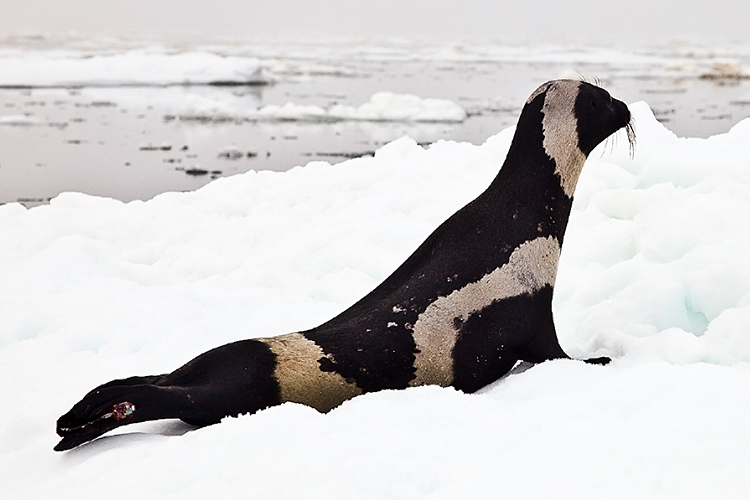
The ribbon seal, or krilyatka, is a rare seal species named for its distinctive coloration. Adult males have a highly contrasting pattern — a generally dark, almost black background with white stripes encircling the body in several places. Females have a similar pattern but less contrast, with a lighter background, and the stripes may blend or be barely visible.
Ribbon seals are found in the Arctic and subarctic regions of the Pacific Ocean, specifically in the Bering and Okhotsk Seas.
Among the ice, they choose flat white ice floes, even tall ones — these animals are excellent jumpers. They carefully inspect the ice floe, jumping onto it several times before choosing a spot to sleep. However, once on the ice, they let down their guard, making it easier to approach them than other seals.
Adult ribbon seals primarily feed on fish, cephalopods, and occasionally crustaceans.
Interesting fact
When caught in nets, these seals pretend to be dead.
You can find more interesting facts about ribbon seals in our article “Ribbon Seal: Life of One of the Arctic’s Most Mysterious Inhabitants.”
Inca Tern

The Inca tern is distinguished by its ash-gray plumage and white curled feather tufts about 5 cm long on either side of the beak’s base.
The Inca tern nests on rocky coasts from Peru to northern Chile. It winters in coastal regions from Ecuador to central Chile. Since 2004, the International Union for Conservation of Nature has classified the bird’s status as “near threatened” due to a significant population decline.
The Inca tern is about 40 cm in size and weighs around 190 grams. It makes sounds that faintly resemble a cat’s meow.
The Inca tern hunts in the cold but fish-rich Peruvian Current. It often follows fishing trawlers to get leftover catch. It also follows sea lions, whales, and cormorants, catching the fish they scare up.
You can find more interesting facts about this bird in our article “Inca Tern: The Mustachioed Seabird.”
Plains Viscacha

The plains viscacha is a mammal species from the chinchilla family. Males have distinctive black whiskers and stiff sideburns, and they are significantly larger than females. The plains viscacha is a large rodent, weighing up to 9 kg.
These animals inhabit northern, central, and eastern Argentina, southern and western Paraguay, and southeastern Bolivia.
Viscachas live in colonies ranging from a few individuals to hundreds. They build carefully designed burrows that are occupied by successive colonies for decades.
Plains viscachas collect branches and heavy objects to block the entrance to their burrow. When living near human settlements, they tend to gather brooms, tables, garden tools, firewood, trinkets, pieces of concrete, and many man-made items to cover the burrow entrance.
You can find more interesting facts about this creature in our article “Plains Viscacha: An Amazing Rodent from the Chinchilla Family.”
Baron’s Mantella
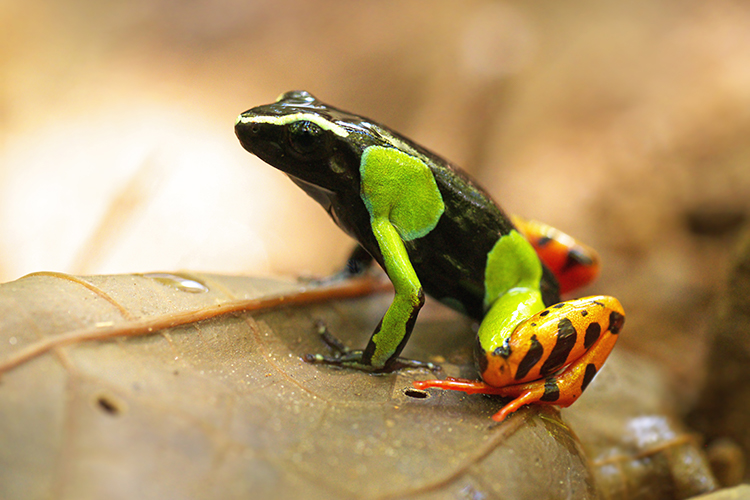
Mantella baroni is a species of small poisonous frog that lives in Madagascar. This frog is also known as Baron’s mantella, colorful golden frog, or Madagascar poison frog.
According to estimates, this family colonized the island of Madagascar 76–87 million years ago, evolving in isolation and adaptively changing in both geographic range and species diversity on the island.
It inhabits swampy forests, streams, bamboo groves, forest edges, and riversides.
Baron’s mantella feeds mainly on ants but also consumes a range of other arthropods such as beetles, spiders, and mites.
Ingesting mites allows them to accumulate high concentrations of pharmacologically active alkaloids in their skin, making them toxic to predators. Their bright coloration serves as a warning sign that eating them may be dangerous and cause illness.
Greater Gliders
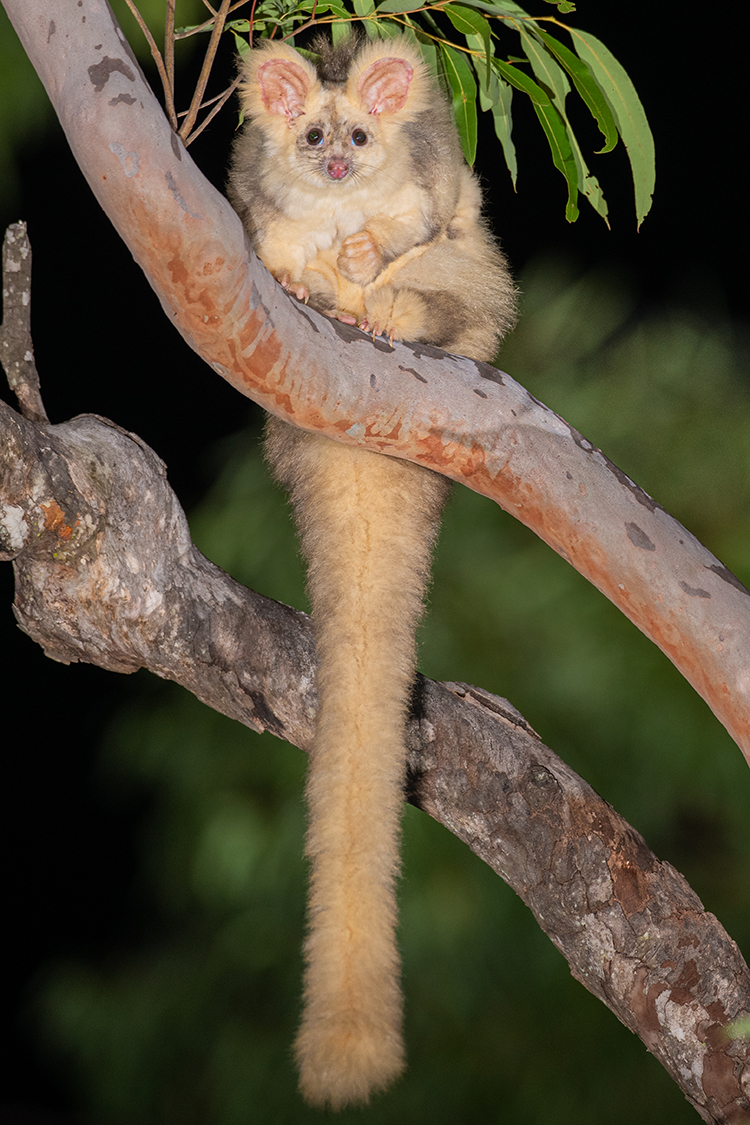
Greater gliders are three species of large gliding marsupials from the genus Petauroides, all of which inhabit eastern Australia. They are the largest gliding marsupials in the world. They use their fluffy membranes to glide up to 100 meters between trees. They also wrap themselves in their membranes, using them like blankets to stay warm.
Until 2020, they were considered a single species. All three species differ in size: the northern greater glider grows only as large as a small ringtail possum, while the southern greater glider reaches the size of a domestic cat. The central greater glider is intermediate between the two.
These animals are rather clumsy on the ground but very agile in trees and while gliding. Their bodies are covered with shaggy fur, which increases their apparent size, and they have long bushy tails ranging from 44 to 53 centimeters. Each side of the body has membranes stretching from elbow to ankle, which allow these animals to perform controlled glides.
Greater gliders are primarily nocturnal, spending the night searching for food in the highest parts of the forest. During the day, they spend most of their time in tree hollows, with each animal occupying up to 20 different dens within its home range.
You can find more interesting facts about greater gliders in our article “Greater Gliders: Amazing Soaring Marsupials from Australia.”