Українська
  Русский
  Polski
  Deutsch
  Français
  Español
  Nederlands
  Svenska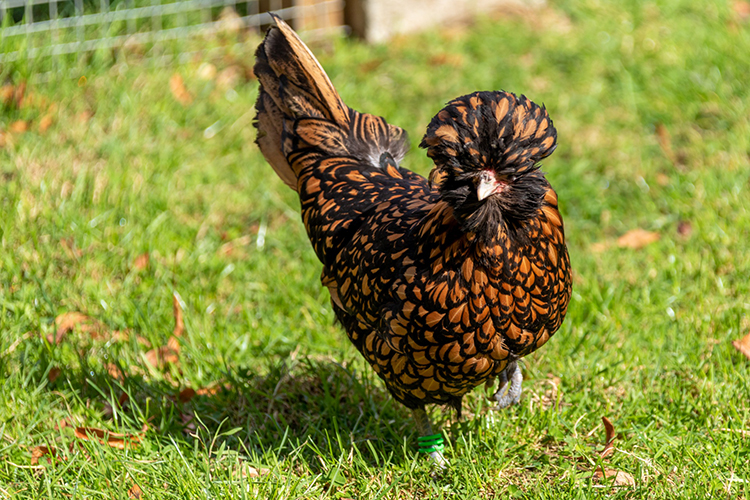
Polish Chicken Is Not a Polish Chicken. Despite the name, this remarkable breed with its characteristic fluffy crest originated in 16th-century Netherlands and possesses a brain anatomy unique among all vertebrates. Today fewer than 10,000 of these living works of art remain worldwide, making them one of the rarest decorative chicken breeds.
The breed drew the attention of the international scientific community in 2023 when researchers discovered that their brain is shaped like a dumbbell — the only such case among vertebrates. This anatomical feature is linked to a bony protrusion on the skull that supports the famous feathered crest, turning an ordinary chicken into a feathered aristocrat.
Historical Detective Story: The Mystery of a Name Without Geography
The name “Polish Chicken” represents one of the greatest etymological mysteries in poultry breeding. The breed was never connected to Poland — it was developed by Dutch breeders in the 16th–17th centuries from ancestors likely brought from Spain during the Spanish occupation of the Netherlands.
Charles Darwin proposed the most popular theory of the name’s origin: he classified all crested chickens as “Polish” because their feather crests resembled the feathered ornaments on the hats of Polish soldiers. An alternative Dutch theory links the name to the Middle Dutch word “pol” (head), referring to the dome-shaped skull.
The first reliable images of the breed appear in Dutch paintings of 1676, and by the 18th century Polish Chickens had spread across Europe. In 1874, they became one of the first standardized breeds in America, where they were valued for egg production until more productive Leghorns pushed them out of the market.
An Anatomical Wonder: A Skull Like an Empty Ball
Polish Chickens have a skull anatomy unique among all vertebrates. A bony protrusion the size of a ping-pong ball supports the crest but makes the skull hollow, while the brain takes a dumbbell shape — the front part sits in the bony “helmet,” the rear in the main skull cavity.
This structure enlarges the brain by 15–30% compared to ordinary chickens but creates serious problems. The skull is covered only by skin, leaving the birds extremely vulnerable to head injuries. In 2023 an international research team from the University of Arkansas found that Polish Chickens became a model organism for studying the evolution of new brain forms in vertebrates.
External Features and Color Variety
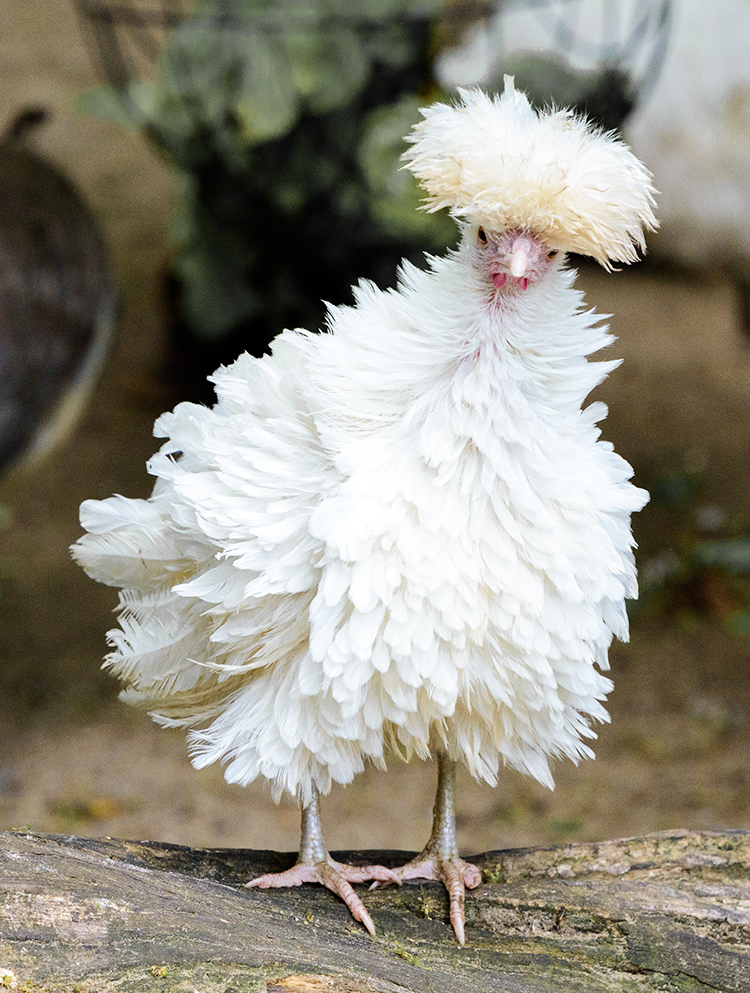
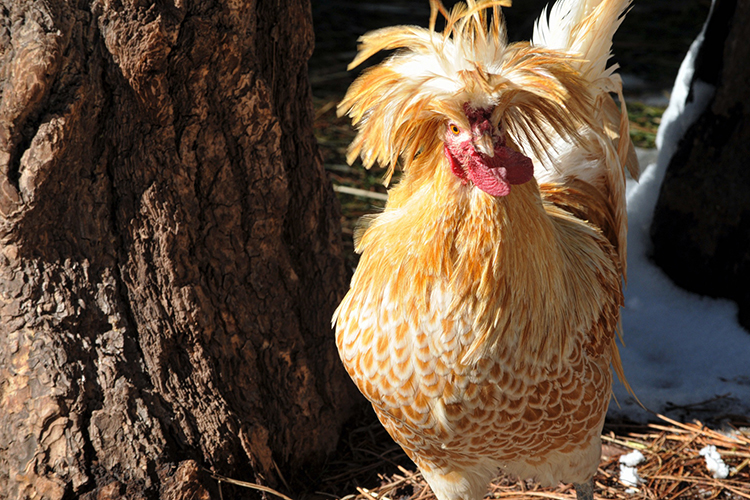
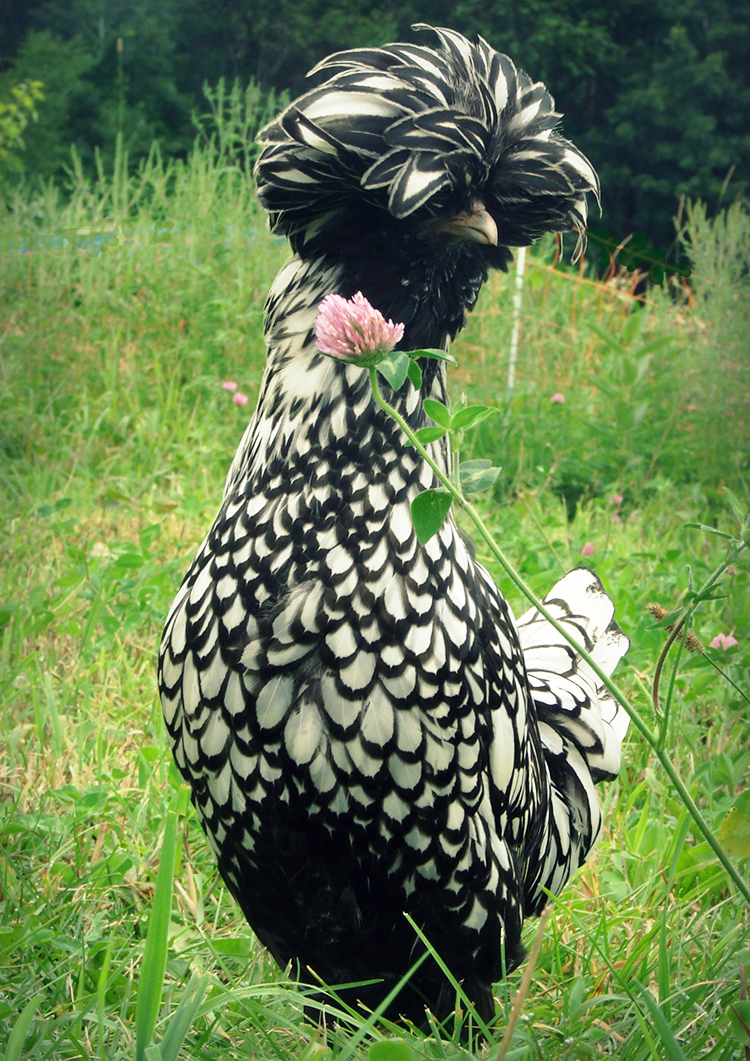
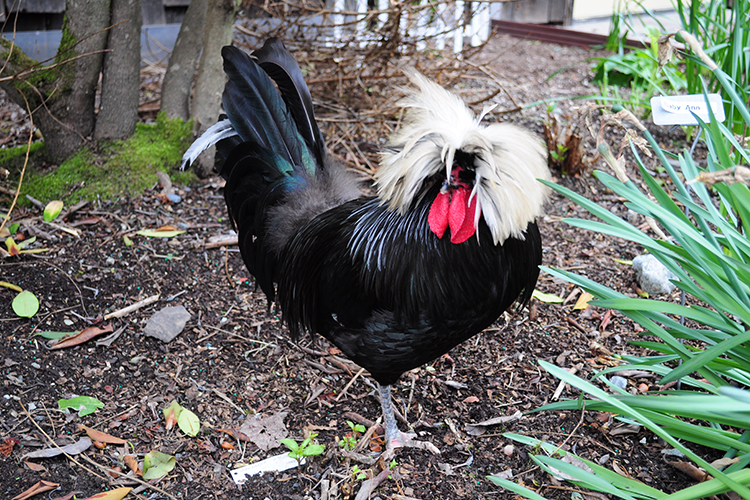
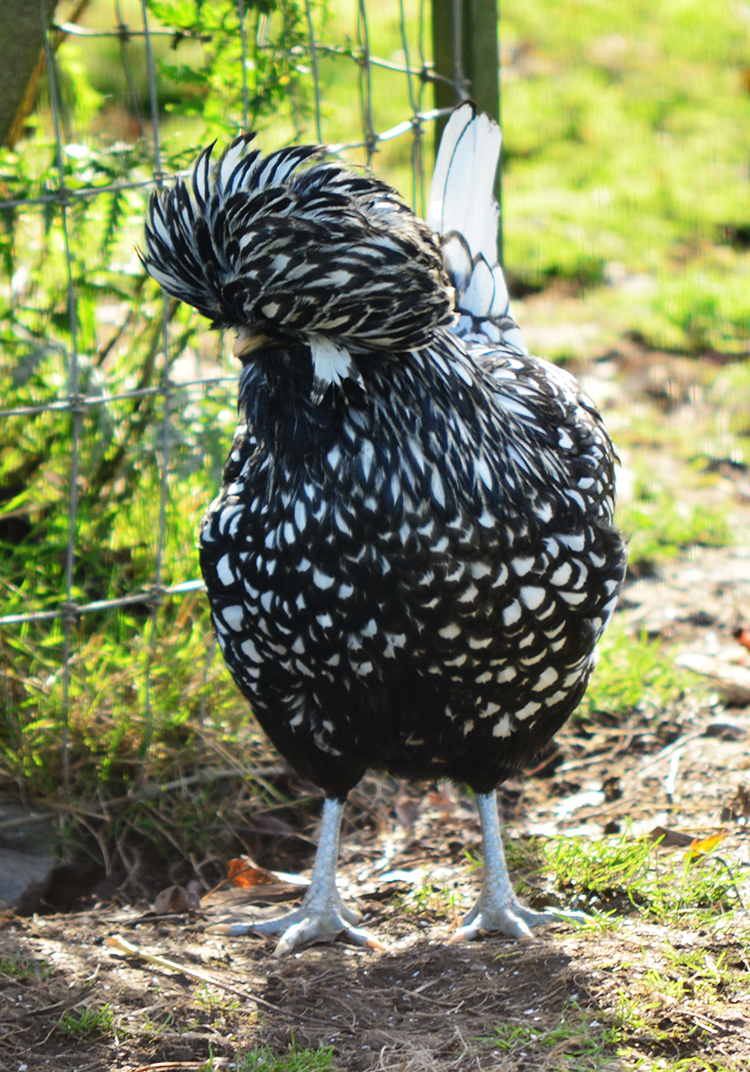
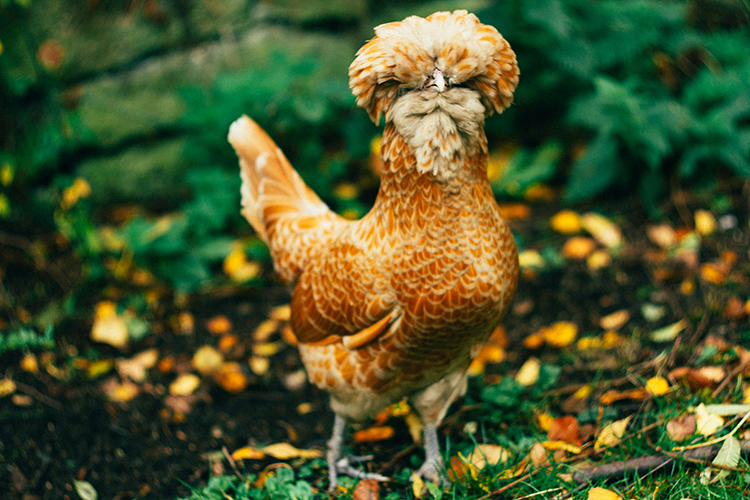
Polish Chickens are medium-light birds weighing 2–2.7 kg with an elegant, slender build. Their main feature is the crest, which in hens forms a neat “pom-pom,” while in roosters it becomes tousled and flowing.
The breed impresses with its diversity of colors: more than 15 variations are officially recognized, from classic white-crested blacks to exotic golden-laced. The rarest variety, Tolbunt, combines reddish-brown, black, and white in equal proportions — such chicks sell for $30 and up, three times the price of regular Polish Chickens.
The Aristocrat’s Character With Vision Problems
Polish Chickens are friendly but nervous aristocrats of the chicken world. Their lush crests limit peripheral vision, making them constantly alert to sudden movements. Owners describe them as “comical and amusing” pets that tame easily and can sit on hands for hours.
In the social hierarchy of a flock, Polish Chickens usually hold a low position due to their non-aggressiveness and poor vision. They do not coexist well with aggressive breeds and require protected housing. 71% of owners are willing to keep Polish Chickens again, despite the extra care required.
Keeping Requirements for Decorative Aristocrats
Keeping Polish Chickens requires a special approach due to their vulnerability. Their crests get wet and freeze easily, so they need narrow drinkers and constant protection from rain. Sand cannot be used as bedding — Polish Chickens cannot tolerate it.
Despite their decorative nature, the hens retain moderate egg-laying capacity of 150–200 eggs per year, medium-sized with white shells. However, their brooding instinct is almost entirely lost, so artificial incubation is usually required for reproduction.
Digital Stars and Scientific Discoveries
In the social media era, Polish Chickens have become true stars: the hashtag #PolishChicken has reached 2.4 million posts on TikTok, and #PolishHen — 8.7 million. Their comical looks and amusing behavior make them popular influencers among chicken accounts.
The scientific community is no less interested in Polish Chickens. In addition to their unique brain anatomy, researchers study their genetic traits of crestedness, which may shed light on the evolution of ornamental features in birds. Archaeological finds show that similar birds existed as far back as Roman times.
Survival on the Brink of Extinction
The modern status of Polish Chickens raises concerns among conservationists. The Livestock Conservancy has included the breed in the “Watch” category — meaning fewer than 10,000 breeding birds remain worldwide. The decline stems from a shift in priorities: since the mid-19th century the breed has been raised exclusively for beauty, ignoring productive qualities.
The rarest varieties balance on the edge of extinction. Frizzle Tolbunt — Polish Chickens with outward-curled feathers in a “corn kernel” pattern — exist in only a few specimens, and their price is set individually by breeders.
Why Polish Chickens Win Hearts Worldwide
The Polish Chicken represents a unique phenomenon in domestic poultry — a breed that evolved from practical layers into living works of art with scientifically unique anatomy. Their history debunks geographic myths, their appearance conquers social media, and their brains intrigue scientists.
The future of the breed depends on balancing aesthetics and health. Growing interest in ornamental breeds, their scientific value as a model organism, and their popularity in the digital sphere give hope for the preservation of these feathered aristocrats. But breeders must actively work to maintain the genetic diversity of this small population.
In a world where productivity often outweighs beauty, Polish Chickens remain a reminder that sometimes nature creates simply for the joy of the eyes — even if the price is a dumbbell-shaped brain.