Українська
  Русский
  Polski
  Deutsch
  Français
  Español
  Nederlands
  Svenska
 Greater gliders (Petauroides volans) are unusual marsupial animals that live in the eucalyptus forests of eastern Australia. Thanks to their wide skin membranes between their limbs, they can perform impressive gliding flights, covering dozens of meters through the forest canopy. Below is detailed information about these fascinating creatures.
Overview
- Average size: body length from 34 to 58 cm, tail can reach up to 60 cm
- Weight: from 900 g to 1.7 kg
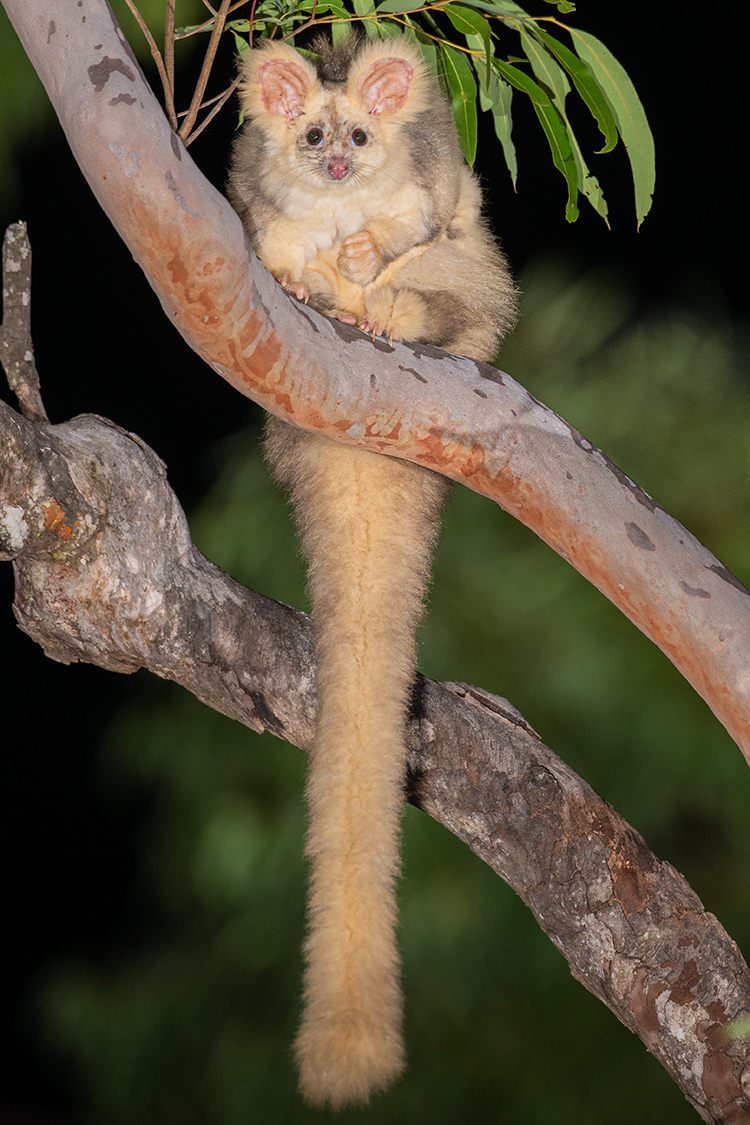
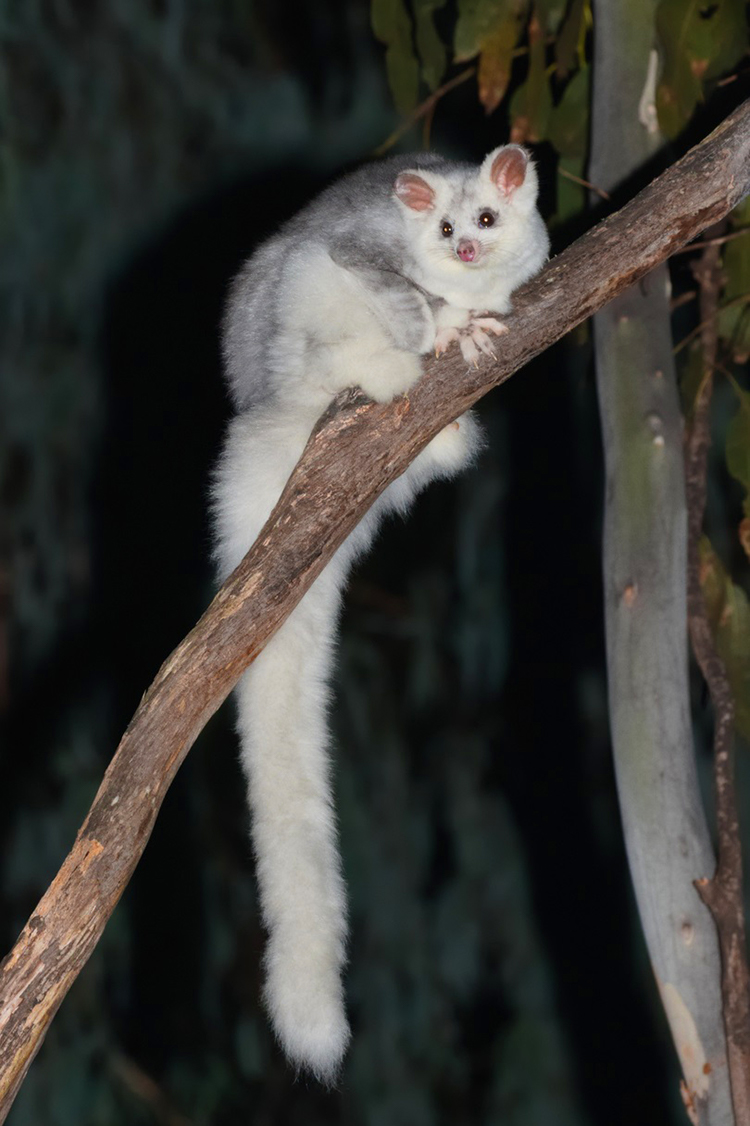
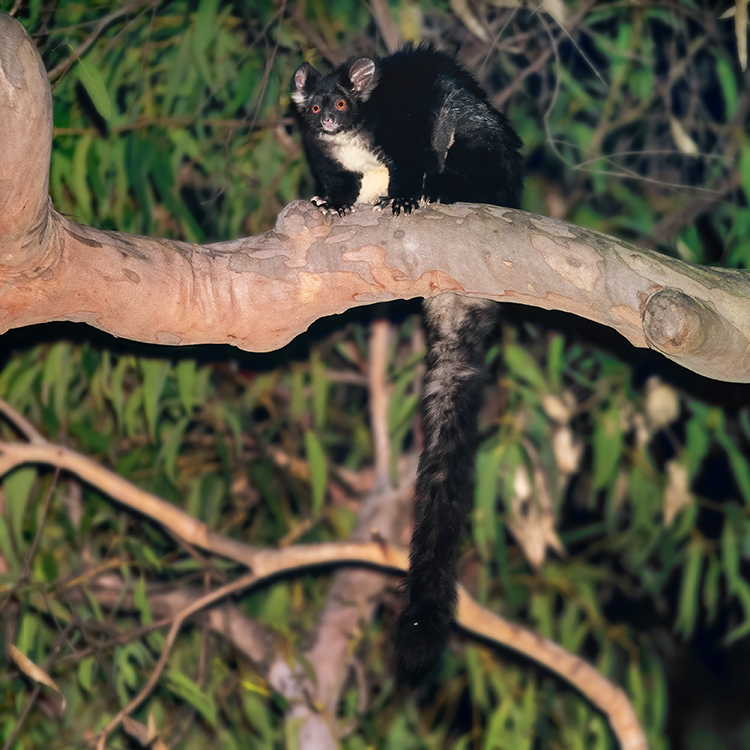
- Color: fur ranges from almost white to dark gray
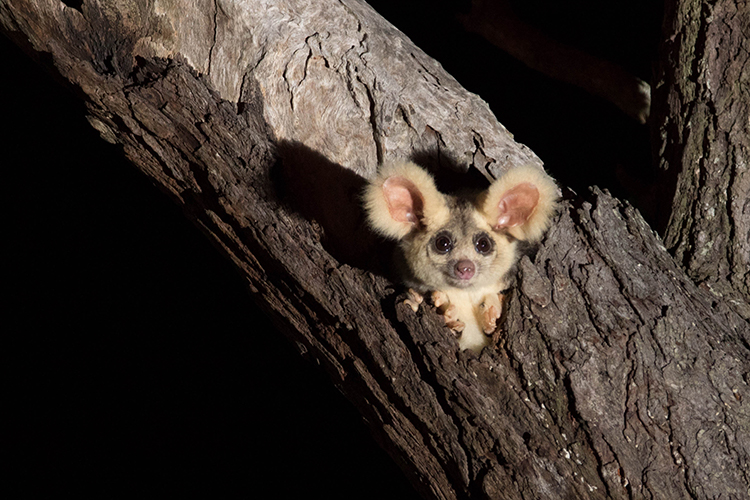
- Lifestyle: nocturnal, solitary animals that prefer to spend the day in tree hollows
It was initially believed that there was only one species of greater glider, but recent studies have identified three distinct species that differ in size:
- Northern greater glider: grows only to the size of a small ringtail possum;
- Southern greater glider: grows to the size of a large domestic cat;
- Central greater glider: occupies an intermediate size between the other two species.
Habitat and Range
Greater gliders prefer dense eucalyptus forests in the coastal and mountainous regions of eastern Australia. They require tall trees with a sufficiently dense canopy to move safely between branches. During the day, they usually hide in tree hollows, which provide protection from predators and extreme weather conditions.
Diet and Behavior
The diet of greater gliders mainly consists of eucalyptus leaves, flowers, and shoots. They may also eat buds and berries when available.
These marsupials are nocturnal and come out to forage after sunset. They live alone except during seasonal encounters between males and females during mating season, and between mothers and their young. They are cautious creatures, rarely leaving the tree canopy and avoiding open spaces.
Gliding Ability
The most striking feature of greater gliders is their ability to “glide” through the air using skin membranes that stretch from elbows to ankles. In a single glide, they can cover distances of up to 100 meters, changing direction mid-air. This ability helps them move quickly in search of food and escape from ground predators.
Reproduction
Greater gliders are marsupials, which means their young are born very small and continue to develop in the mother’s pouch. After spending several months in the pouch, the offspring move into a tree hollow, where they remain under the mother’s protection and care for a while before becoming fully independent.
Conservation Status and Threats
In some areas of Australia, the population of greater gliders is declining. Major threats include:
- Deforestation: reduction in the number of old trees that form hollows for shelter and rest, as well as a decline in food availability.
- Climate change: abnormal heat and droughts can negatively affect eucalyptus forests and reduce food availability.
- Habitat fragmentation: roads and farmland break up forest landscapes, making it harder for animals to move freely.
The International Union for Conservation of Nature (IUCN) classifies greater gliders as Vulnerable, so many regions are taking action to preserve their natural habitat.
Interesting Facts
- Greater gliders have very dense fur that protects them from low nighttime temperatures typical of Australia's mountainous regions.
- Unlike noisier marsupials, greater gliders are rarely seen or heard: they are unsociable and lead a modest life in the high canopy.
- Greater gliders are known to be quite sensitive to stress. Keeping them in zoos is challenging, as they require spacious enclosures and special conditions.
- These nocturnal “leaf-and-flower munchers” help maintain the health of eucalyptus forests, as their feeding stimulates tree shoot regeneration and supports seed dispersal.
- Greater gliders are the largest gliding marsupials in the world. Their total length (including the tail) can reach nearly one meter. Their long, bushy tails help them maneuver efficiently in flight.
- The diet of greater gliders consists almost entirely of eucalyptus leaves, which are rich in toxins. These animals have a specialized digestive system that allows them to safely eliminate harmful substances. Specific gut bacteria help break down toxins and extract nutrients from tough plant material.
- Compared to other marsupials, greater gliders have a low metabolic rate. This helps them conserve energy, as a eucalyptus-based diet is not very nutritious.
- During the day, while hiding in tree hollows or foliage, greater gliders can remain motionless for hours. This behavior reduces the risk of predator encounters and helps conserve energy.
- The fur of greater gliders can be not only gray: there are also nearly white and even very dark (almost black) individuals. This color variation is due to both genetic factors and environmental conditions.
- Greater gliders usually give birth to only one offspring per year, which continues to develop in the mother's pouch for a long time (3–4 months). After leaving the pouch, the youngster stays close to the mother for a while, learning survival skills in the treetop canopy.
Greater gliders are unique inhabitants of Australian forests, capable of impressively gliding between trees and playing a significant role in the eucalyptus ecosystem. Preserving these animals is an important task for future generations. Conservation efforts aimed at protecting old trees and restoring lost forest areas will help ensure the safety and prosperity of greater gliders in the wild.