Українська
  Русский
  Polski
  Deutsch
  Français
  Español
  Nederlands
  Svenska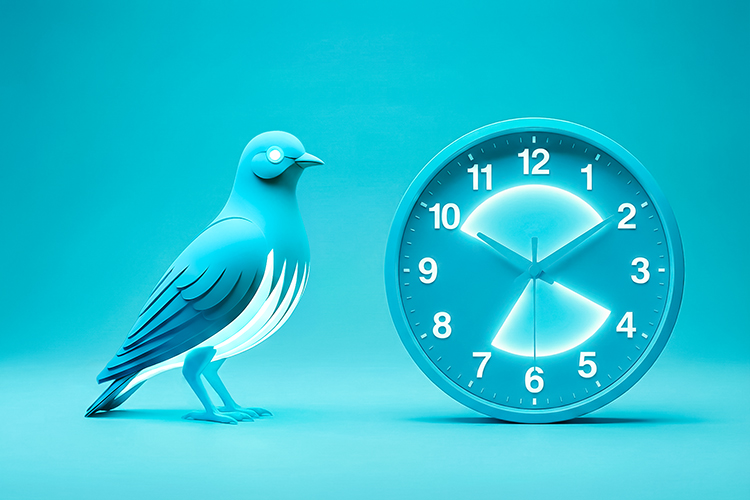
© Factum-Info
For a long time, we were told the world is divided into two opposing camps. You're either a heroic “Morning Lark,” greeting the sunrise with a smile and ready to conquer the world by noon, or a creative “Night Owl,” whose energy and inspiration awaken only when the city sleeps.
This black-and-white worldview made millions feel “wrong.” If you struggle to get up at 6 a.m. but also can't work until 2 a.m., who are you?
Science has a clear answer: you're normal. You belong to the third, intermediate chronotype. It's not just a “mix” of the other two, but a distinct, evolutionarily successful, and the most common biological pattern.
The Golden Mean of Humanity
About two-thirds of the world's population belong to this type. That means the modern world—with its 9-to-5 workdays, school schedules, and urban rhythms—was created by you and for you.
Your biological clock runs almost in sync with Earth’s rotation (its cycle is around 24.2 hours), allowing you to adapt to day and night changes effortlessly, unlike the extreme types.
Terminology Minute: Bear, Hummingbird, or Dove?
Before we continue, it’s important to clear up some confusion. Since science focused for a long time only on the extremes (“owls” and “larks”), your type has earned many names across countries and systems.
- In formal science, you're referred to as the “Intermediate” or “Daytime” type.
- In popular Western psychology, the term “Hummingbird” is often used.
- In the well-known classification by Dr. Michael Breus, this type is called the “Bear.”
So why do we choose the symbol of the “Dove”? It’s simple: this image best reflects your biorhythm. You’re not jittery like a tiny hummingbird, nor do you hibernate like a bear. A “Dove” (as in the symbol of peace) represents balance and harmony. It's a bird perfectly adapted to the rhythm of city life. That noble symbol is what you'll see in our illustrations—but remember: if you're used to calling yourself a “hummingbird” or a “bear,” this article is still about you.
Genetic Code: Why Are You Like This?
Being a “Dove” isn't about habits or willpower—it's written in your DNA. Scientists have discovered that chronotype is determined by the complex work of “clock genes” (like CLOCK and PER3).
While “larks” and “owls” often have these genes working in either accelerated or delayed modes, “doves” show unique genetic flexibility. You're most likely a carrier of a mixed set of genes (a heterozygote).
That’s your superpower: you're a kind of biological bridge. You can wake up early with the larks or stay up late with the owls, and your body will recover much faster than those with extreme chronotypes.

Your Ideal Rhythm: The “Double Wave” Effect
Forget the popular advice to “eat the frog” (tackle your hardest task) right after waking up. That rule may work for “larks,” but for you, it can lead to burnout.
It’s also commonly believed that “daytime” people maintain steady energy from morning to evening. But in-depth studies show a more fascinating pattern. Your productivity doesn’t follow a straight line—it comes in two powerful waves with a pause in between.
Here’s how to ride those waves to get more done and feel less drained.
1. Morning Warm-Up (07:00–10:00)
“Doves” wake up easily, usually with an alarm around 7–8 a.m., but their brains need time to boot up. Don’t expect mental miracles in the first few hours.
- What’s Happening: Melatonin levels are dropping, and cortisol is just starting to rise. You're awake, but your “engine” is still cold.
- What to Do: Use this time to ease into the day: shower, eat a hearty breakfast, check email, plan, and do low-effort tasks.
- Tip: Use bright light (open those curtains!) to fully wake up your brain.
2. The Golden Window (10:00–14:00)
This is your prime cognitive peak. A couple of hours after waking, your concentration hits its max, and your brain is highly receptive to new information.
- What’s Happening: An ideal mix of hormones and body temperature for peak brain function.
- What to Do: This four-hour block is perfect for critical meetings, complex analysis, writing reports, or studying.
- Dove Mistake: Wasting this golden time on social media, pointless meetings, or small tasks. Miss this window, and it’s hard to regain that mental clarity later in the day.
3. Reboot (14:00–16:00)
This is when a physiological dip sets in—the well-known post-lunch slump (post-lunch dip). It’s not laziness or the result of a heavy meal—it’s a biological need. During this time, your brain’s alertness signal temporarily drops.
- What to Do: Fighting through it or chugging coffee is pointless and harms your evening sleep. Instead, handle routine, non-creative tasks (organizing folders, answering simple emails).
- Pro Tip: If possible, a short nap (power nap) of 15–20 minutes will reset your system and shake off the drowsiness. Just don’t sleep longer than 20 minutes to avoid falling into deep sleep.
4. Second Wave: Body and Social Peak (16:00–19:00)
Toward evening, you get a “second wind,” but it’s different from the morning. Body temperature hits its daily peak, muscles become more elastic, and reaction time sharpens.
- What to Do: This is the best time for sports, strength training, and breaking personal records. As for work, your brain may not be as sharp for deep analysis but is great for social interactions, creative projects, and teamwork.

Hidden Advantage: Mental Resilience
Being a “Dove” benefits not only your career but also your nervous system. One of the main issues modern people face is “social jetlag.” It’s a state of chronic stress when your biological clock is out of sync with your actual wake-up time (like “Night Owls” forced to get up at 7 a.m. for work).
This problem barely affects you. Your weekend schedule differs little from your weekdays, sparing your body unnecessary stress. Studies confirm the following benefits:
- Strong Nerves: “Doves” show higher emotional stability and are less prone to depression compared to evening types.
- Personality: Psychologists often highlight traits such as conscientiousness, friendliness, and high empathy. You’re a natural diplomat and team player.
- Immunity: A stable daily routine has a positive impact on your immune system. You get seasonal colds less often because your body has time to fully recover at night.
Chrononutrition: How Food Drives Your Energy
A new science — chrononutrition — shows that the timing of your meals is just as important as the quality of your food. For “Doves,” this is a critical factor. You might feel like you can digest nails, but even your metabolism follows the clock.
1. Breakfast Is King
Skipping breakfast is a major metabolic mistake for your type. In the morning, your insulin sensitivity is at its peak. Your body is ready to convert calories into pure energy instead of storing them as fat.
A hearty breakfast between 7:30 and 8:30 a.m. (protein + complex carbs) jumpstarts your metabolism. Research shows that people of your type who consume most of their calories in the first half of the day are less likely to struggle with excess weight.
Ideal Menu
Scrambled eggs, oatmeal with nuts, cottage cheese, or whole grain toast.
2. The Danger of Late Dinners
Your body begins preparing for sleep early. Around 9 p.m., melatonin — the sleep hormone — starts being produced. The issue is that melatonin suppresses insulin production. If you eat a heavy dinner after 8–9 p.m., glucose will linger in your blood, damaging blood vessels and promoting weight gain.
Rule
Dinner should be light (fish, vegetables, poultry) and finished at least 2–3 hours before sleep.
Sleep: Your Superpower
“Doves” usually go to bed around 11 p.m., and that’s the ideal time from a hormonal standpoint. Unlike “Owls,” who often suffer from late-night insomnia, you have a natural “sleep window.”
About two hours before your usual bedtime (around 9 p.m.), your body begins actively producing melatonin. But there’s a catch: this only happens in dim lighting conditions.
Main Enemy: blue light from screens. Because your system is light-sensitive, using gadgets after 9 p.m. can play a dirty trick. Bright screens block melatonin, and your brain thinks it’s daytime. This can shift your rhythm and turn you into a sleep-deprived “Owl” with a heavy head in the morning.
Tip
Set your phone and laptop to automatically enable “Night Mode” (blue light filter) at exactly 9 p.m. It will act as a clear biological signal for your brain: “The sun has set — time to slow down.”

Fun Facts About “Doves”
- Global Dominance. “Doves” aren’t just the most common type — they’re demographic royalty. This chronotype includes around 60–65% of the world’s population. That’s why the standard 9-to-5 schedule feels too late for “Larks” and too early for “Owls,” but it fits “Doves” perfectly. In essence, modern civilization was built by “Doves,” for “Doves.”
- True Children of the Sun. Unlike “Larks,” who wake in darkness before sunrise, or “Owls,” who come alive after sunset, “Doves” are the only type whose biological clock is nearly perfectly synchronized with the solar cycle. Your energy levels rise with the sun and wind down as it sets.
- The 3 p.m. Slump Is Normal. Many blame themselves for laziness or a heavy lunch when they feel sleepy in the afternoon. But for “Doves,” this is pure biology. This type has a genetically programmed drop in activity between 2 and 4 p.m. (the so-called post-lunch dip), even if you skip lunch. This time is evolutionarily designed for rest — not productivity.
- The Social Glue. Personality research shows that people of this type often score high on empathy, tact, and conflict avoidance. If “Larks” are linked to personal productivity and “Owls” to creative individualism, then “Doves” are ideal team players — the ones who bring people together.
- Jetlag Resistance. “Doves” are the least affected by social jetlag — when your internal clock doesn’t match your alarm clock. Since school and work schedules align with your natural rhythm, you experience less chronic stress than other types.
Summary: How to Live Long and Thrive
Being a “Dove” means winning the genetic lottery of stability. You’re not a boring “middle ground” — you’re an evolutionary all-rounder, capable of working efficiently, resting deeply, and bringing harmony to the team.
To unlock your full potential, remember these three simple rules:
- Protect Your “Golden Window” (10:00–14:00): Reserve this time for your most important work — not for checking emails.
- Honor the Afternoon Dip: Don’t blame yourself for feeling tired at 3 p.m. — it’s natural. Take a break.
- Turn Off the Lights: A digital curfew after 9 p.m. will protect your health and productivity for years to come.
What Can You Do Right Now? Look at your to-do list for tomorrow. Find the most challenging task. If it’s scheduled for 9 a.m. or 4 p.m., move it. Put it in the 10:00 to 14:00 slot. Try living one day in sync with your biology — you’ll be amazed by the results.