Українська
  Русский
  Polski
  Deutsch
  Français
  Español
  Nederlands
  Svenska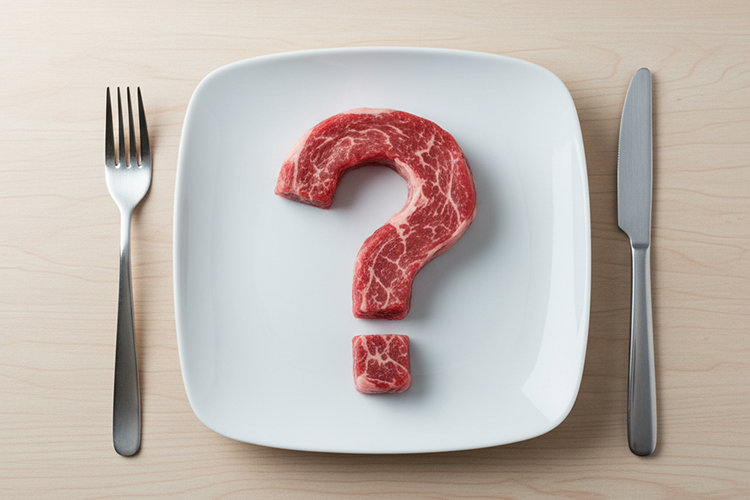
© Factum-Info
Imagine this: lions eat antelopes, wolves hunt deer, and bears catch salmon — and yet they don’t suffer from heart attacks or cancer. But when humans regularly eat red meat, the risk of these diseases increases significantly. Why is that?
The answer lies in a tiny molecule that radically changed the fate of humanity during evolution. This genetic mutation made humans the only mammals on the planet whose immune system perceives certain components of red meat as a threat.
In this article, we will explore the fascinating science behind this phenomenon. You will learn what happens in your body when you eat beef or pork, and exactly how many “dangerous” molecules are present in different foods. We will also discuss practical recommendations: how to minimize risks without completely giving up your favorite dishes, and which alternative protein sources can help maintain health for many years.
The Molecule That Changed Humanity
About 2.8 million years ago, a mutation occurred in the DNA of our ancestors that forever separated humans from all other mammals. We lost the ability to produce a special molecule — N-glycolylneuraminic acid (Neu5Gc).
All other mammals, including our closest primate relatives, produce two types of sialic acids: Neu5Ac and Neu5Gc. Humans, however, produce only Neu5Ac. The difference between these molecules is minimal — just one oxygen atom, but the consequences of this difference are immense.
Interestingly, this genetic loss occurred about 700,000 years before the period of rapid human brain growth. Scientists suggest that the loss of Neu5Gc may have contributed to brain development and the emergence of humans as a species with unique cognitive abilities.
What Happens When We Eat Red Meat
When humans consume animal meat or dairy products, foreign Neu5Gc enters the body. Our immune system perceives this molecule as an invader and begins producing antibodies against it.
But here is the paradox: Neu5Gc from food integrates into our own tissues — especially in blood vessel walls and mucous membranes. As a result, the immune system attacks our own cells containing this “enemy” molecule. Scientists call this process xsialitis — inflammation caused by foreign sialic acids.
This mechanism has been confirmed in experiments on mice in which the gene producing Neu5Gc was artificially disabled. Such mice, when fed a diet rich in Neu5Gc, showed a 2.4-fold increase in atherosclerosis compared to the control group.
How Much of the “Dangerous Molecule” Is in Different Foods
For a long time, inaccurate data circulated in scientific literature about Neu5Gc content in foods. Modern studies using high-precision analysis methods show the following picture:
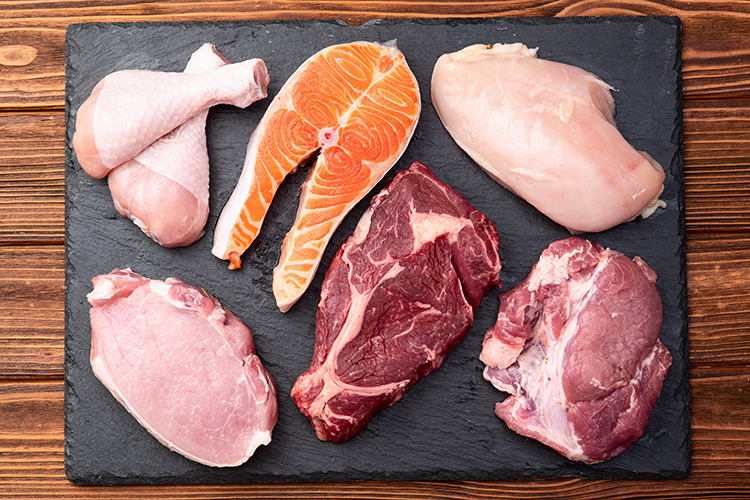
Red Meat (per 100 grams):
- Beef: 3000–4000 μg
- Lamb: 2000–2500 μg
- Pork: 560–2550 μg
Poultry and Fish:
- Chicken, duck: 0–20 μg (virtually absent)
- Most fish: 3–150 μg
- Salmon: up to 1700 μg (an exception)
Dairy Products:
- Cow’s milk: about 1090 μg per 100 ml
- Goat and sheep milk: contain even more
As you can see, the difference is enormous: beef contains hundreds of times more Neu5Gc than chicken or most fish species.
Why Primates Don’t Get “Human” Diseases
The differences between humans and other primates are striking. In great apes, the incidence of epithelial tumors is less than 2%, while in humans it exceeds 20%. Chimpanzees, our closest relatives, hardly suffer from atherosclerosis — the main cause of heart attacks and strokes in humans.
Even when primates develop heart disease, it progresses in a completely different way: instead of blocked coronary arteries, monkeys develop fibrosis of the heart muscle. It is as if the same car breakdown manifested in completely different ways in different models.
The Problem of Organ Transplantation
The loss of the ability to produce Neu5Gc explains why it is so difficult to transplant animal organs into humans. Neu5Gc is one of the main xenoantigens — molecules that our immune system perceives as foreign during transplantation.
Modern scientists are working on creating genetically modified pigs with genes removed that produce key xenoantigens, including Neu5Gc. These studies show a significant reduction in immune rejection.
What Modern Science Says
Recent studies confirm the link between red meat consumption and the development of chronic diseases through the mechanism of Neu5Gc-induced inflammation. In 2023, scientists found that excessive Neu5Gc intake activates genes associated with colorectal cancer and disrupts metabolic processes in the liver.
Studies on the effect of Neu5Gc on brain development turned out to be especially important. The accumulation of this molecule has been linked to abnormal brain aging and the development of Alzheimer’s disease.
Practical Recommendations
Based on modern scientific data and the recommendations of leading health organizations, experts advise following these dietary principles.
Reasonable Limits on Red Meat
Safe amount: up to 350 grams of red meat per week in cooked form. This is approximately:
- Two small steaks (120–150 g each)
- Three medium-sized homemade cutlets
- One serving of pilaf with meat plus one beefsteak
- 4–5 thin slices of ham per day
Important: this refers to the weight of the cooked product, not raw. During cooking, meat loses 20–25% of its mass.
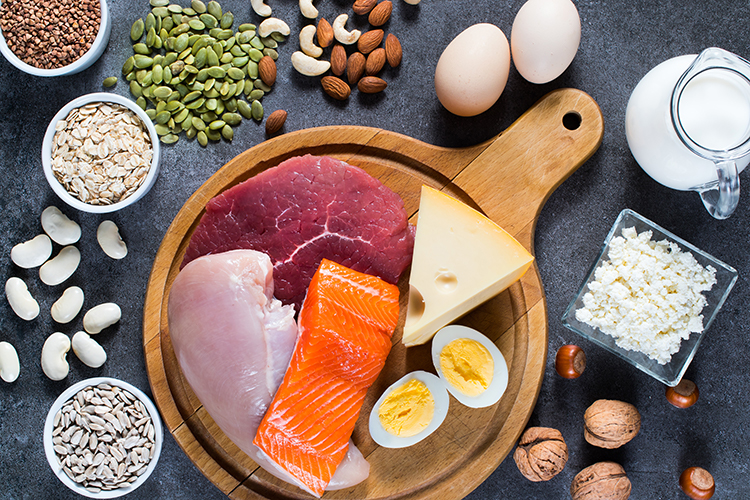
Alternative Sources of Complete Protein
Poultry — The Optimal Substitute:
- Chicken, turkey — virtually no Neu5Gc, rich in easily digestible protein
- Duck, goose — slightly more fat, but still safe
- Quail — a delicacy with high iron content
Fish and Seafood:
- Preferred: cod, hake, pike perch, perch, trout — minimal Neu5Gc
- Moderate: salmon — up to 1700 μg Neu5Gc, but rich in omega-3
- Seafood: shrimp, mussels, squid — excellent sources of protein and micronutrients
Plant Proteins — The Future of Nutrition:
- Legumes: beans, lentils, chickpeas, peas — contain all essential amino acids when properly combined
- Nuts and seeds: almonds, walnuts, pumpkin seeds, chia — plus healthy fats
- Pseudocereals: quinoa, amaranth — complete protein profile
- Soy products: tofu, tempeh, edamame — traditional plant protein sources
Eggs — A Universal Product:
- Contain all essential amino acids in perfect balance
- Virtually no Neu5Gc
- 2–3 eggs can replace 100 g of meat in protein value
Practical Cooking Tips
If You Eat Red Meat:
- Choose lean cuts (tenderloin, lean beef)
- Avoid processed products (sausages, hot dogs, bacon)
- Steam, bake, or stew instead of frying
- Combine with plenty of vegetables and greens
Meal Planning:
- 3–4 days a week — plant proteins
- 2–3 days — poultry or fish
- 1–2 days — red meat (optional)
- One day — completely plant-based diet
Remember: the transition to healthier eating should be gradual. Sudden restrictions often lead to breakdowns. Start by reducing red meat portions and gradually introducing new protein sources into your diet.
A Look Into the Future
Understanding the role of sialic acids in human health opens new opportunities. Scientists are studying whether it is possible to compensate for the harmful effects of Neu5Gc by adding the “native” human molecule Neu5Ac to the diet. Early results are encouraging: supplements with 6'-sialyllactose show positive effects on muscle strength and overall health.
It is possible that in the future we will learn to fully neutralize the negative effects of Neu5Gc or even restore the lost ability to synthesize it. But for now, simply limiting red meat in the diet remains the most effective way to protect your health.
Humans are truly unique among mammals. A tiny mutation that occurred millions of years ago not only contributed to the development of our intelligence but also made us vulnerable to certain diseases. Understanding this mechanism helps explain why dietary recommendations for humans differ so much from the diets of other mammals.
Science continues to study all the nuances of this process, but it is already clear: a sensible approach to choosing protein sources can significantly reduce the risk of cardiovascular disease, cancer, and other chronic illnesses. And this is not just another trendy diet — it is an understanding of the fundamental features of human biology.