Українська
  Русский
  Polski
  Deutsch
  Français
  Español
  Nederlands
  Svenska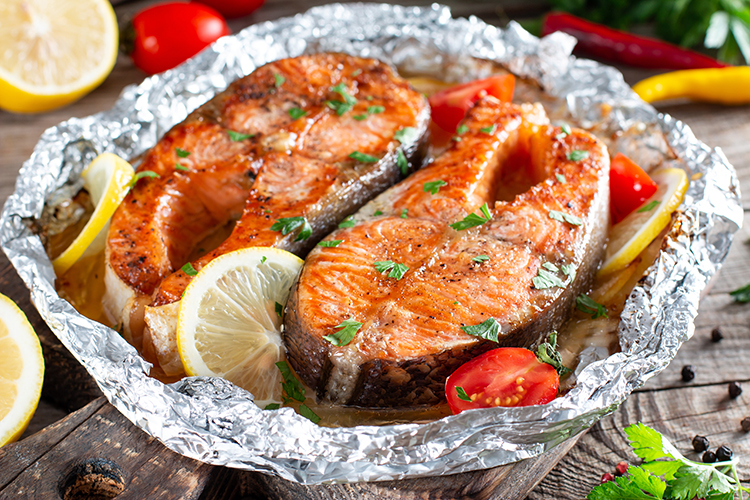
For many of us, baking fish or meat in shiny aluminum foil is a familiar culinary ritual. It is convenient: food stays juicy, and the baking sheet stays clean. However, in recent years, warnings about the harm of this method have become increasingly common due to concerns that metal particles may leech into food.
Let’s find out what modern science says and whether it is worth changing your kitchen habits.
The Metal That Surrounds Us Everywhere
Aluminum is the most abundant metal in the Earth’s crust, making up about 8% of its mass. It surrounds us everywhere: microdoses of this element are found in water, vegetables, corn, cheese, and even tea. We encounter it when using antiperspirant deodorants or taking certain heartburn medications.
Despite such ubiquity, our body does not use aluminum—this metal has no known biological function in the human body. Healthy kidneys successfully excrete almost all ingested aluminum (about 95–99%), but a tiny portion can still accumulate in tissues: bones, the liver, and the brain.
Why Is Foil a “Special Case”?
You might ask: “If we have been cooking in aluminum pots for decades, why have questions arisen specifically about foil?” The answer lies in physics and chemistry.
Aluminum cookware (pots, pans) develops a dense oxide layer during use. This matte film serves as a reliable protective shield that prevents the metal from entering food.
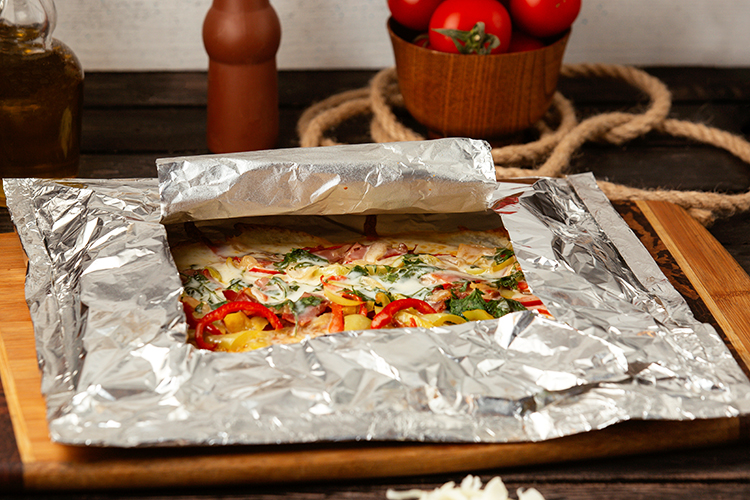
The situation is different with foil. It is a product of very thin rolled metal, it is disposable, and it is impossible to create the same durable protective barrier on it. When heated strongly in the oven, this thin layer breaks down, opening a path for aluminum particles directly into your dish.
“The Dangerous Trio”: When the Risk Increases
Studies show that using foil at moderate temperatures can be safe on its own. However, there are three factors that cause aluminum to actively transfer into food:
- High temperature. When reaching 250 °C (grill mode or intensive baking), the metal content in the finished dish increases sharply. For example, baking meat at this temperature can increase the aluminum level in it by almost four times.
- Acid. Lemon juice, tomatoes, vinegar, pickles, and even wine act as aggressive solvents. They destroy the protective oxide film of aluminum and help it be absorbed by our body more easily.
- Salt and spices. Regular table salt causes the metal to break down much faster. Under a microscope, tiny through-holes are visible on foil after contact with salty food—these are traces of the material dissolving.
The Impact of Aluminum on Health
The main complaint of scientists against aluminum is its harmful effect on the nervous system. The metal is capable of accumulating in brain tissues.
- Risk to the brain. Scientists have been discussing the link between aluminum and Alzheimer’s disease for decades. It has been proven that the concentration of the metal is elevated in the brains of patients with this diagnosis, although science is still debating whether this is a cause or a consequence of the disease.
- Bone fragility. Aluminum can displace calcium from bones. In the long term, this can lead to a decrease in their strength, especially in the elderly.
- The gut. The latest studies indicate that excess aluminum in food can negatively affect the gut microflora and provoke inflammatory processes (for example, Crohn’s disease).
How Much Is Too Much?
It is important to understand: we are not talking about instant poisoning, but about the accumulation of metal over years. Modern safety standards (for example, in the European Union) are only 1 mg of aluminum per 1 kg of body weight per week.
For an adult weighing 70 kg, this is only 70 mg of metal per week. This dose is easy to exceed if you frequently bake meat in foil with marinades and salt.
How to Cook Safely: Practical Tips
Do you need to throw away foil completely? Not at all. It is enough to follow simple safety rules:
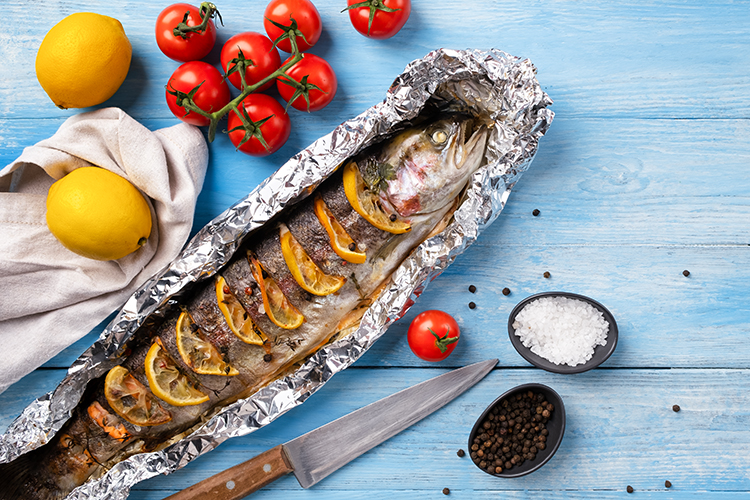
- Do not use foil for acidic dishes. Fish with lemon, meat in tomatoes, or vegetables in marinade should be cooked in glass, ceramic cookware, or stainless steel molds.
- Avoid extreme heat. For baking at very high temperatures, it is better to use special baking dishes with lids.
- Create a barrier. The simplest and most effective way: first wrap the product in parchment paper, and then in foil on top. This will prevent food contact with the metal and preserve all the beneficial properties of the dish.
Summing Up
Foil itself is not poison, but it requires a sensible approach. The main risk lies in the habit of cooking in it constantly, using aggressive marinades and high temperatures. Since aluminum tends to accumulate in our bones and organs over years, minimizing its intake is not a sign of excessive anxiety, but reasonable care for your future.
Replacing foil with parchment when baking or switching to glass molds for acidic dishes are small and easy changes that significantly reduce the load on your body.
For cold storage of products for a short time, foil remains relatively safe. However, for long-term storage (especially dairy and acidic products), it is better to choose glass or modern packaging like Tetra Pak—in them, the foil layer is separated from the contents by inert plastic and does not react with the food.
For the oven, where the temperature reaches 250 °C, it is better to choose materials that do not chemically react with your food. Take care of your health and cook wisely!