Українська
  Русский
  Polski
  Deutsch
  Français
  Español
  Nederlands
  Svenska
Tea is perhaps the most democratic beverage in the world. It is enjoyed everywhere: from London to Beijing, from Istanbul to Buenos Aires. Seems simple enough: boil water, pour it over the leaves — and you're done.
However, over the centuries, many rituals and rules have developed around this seemingly simple act. Some are the wisdom of generations, others are just beautiful myths that modern science is now ready to debunk. We analyzed the physics and chemistry of brewing so you can separate fact from fiction — and make a truly perfect drink.
1. Water: More Than Just a Solvent
Many believe the taste of tea depends only on the type of leaves. But if your expensive oolong or Darjeeling tastes flat or murky, the problem is likely not the tea, but the water.
From a chemical perspective, the water in your cup is an active reagent. The main enemies of flavor are calcium and magnesium, which make water “hard.”
- What happens: Tea polyphenols (the compounds responsible for flavor and health benefits) bind with calcium ions. Instead of dissolving into the water and releasing their aroma, they form an insoluble film on the surface — the unpleasant “tea scum” you may have seen in your cup.
- Color: Hard water is often alkaline, which changes the tea's color, making it dark and dull, robbing it of its beautiful ruby or emerald hue.
Scientific Verdict
For ideal tea, you need soft water. The optimal mineral content is 50–100 mg/L. Using unfiltered tap water can indeed spoil even the finest variety.
2. The “Dead Water” Myth: Can You Boil It Twice?
There is a persistent belief that you should not boil water twice. Some say it becomes “heavy,” harmful, or turns into “a soup of microbes.”
Let’s look at this through the lens of physics:
- Microbes: Boiling kills bacteria. Reboiling sterile water cannot magically introduce microorganisms. Biomass doesn’t appear out of nowhere.
- Heavy water: The conversion of regular water into heavy water (containing the deuterium isotope) during boiling is negligible. For the concentration of harmful substances to become even remotely significant, you would need to boil off dozens of liters in the same kettle without adding any fresh water.
Scientific Verdict
The fear of reboiling water is a myth. It is absolutely safe.
3. Oxygen and the “White Boil”
Ancient texts and some modern connoisseurs advise removing the kettle at the “white boil” stage — when the water just begins to cloud with fine bubbles, before it reaches a full boil. Their argument: “boiling kills the oxygen needed to release the aroma.”
There is a grain of truth here, but it is overrated. Yes, oxygen leaves the water at 100°C. However, when you pour the water from the kettle into the cup, immediate re-aeration occurs — the stream captures air, and the oxygen level is restored.
The more important factor is temperature:
- Green tea is best brewed at the “white boil” stage (about 85–90 °C) to avoid bitterness.
- Black tea requires a full 100 °C to extract its flavor. If you remove the kettle too early out of fear of “losing oxygen,” you’ll simply end up with a weak, under-steeped infusion.
4. Teaware: The Redemption of Metal
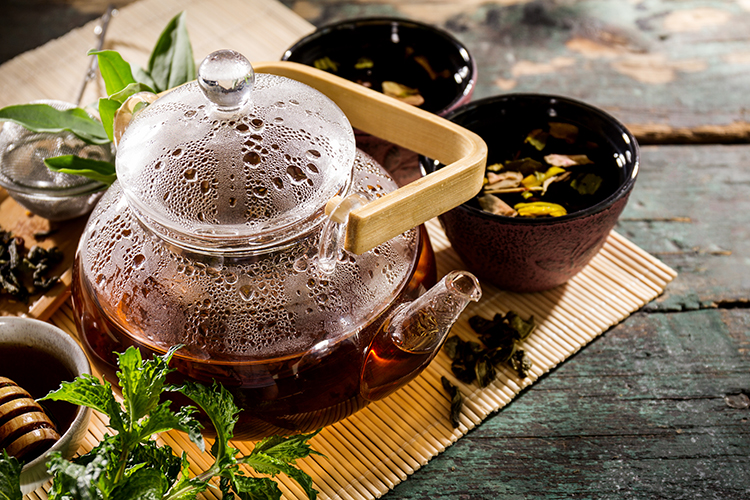
For a long time, metal teaware was considered the enemy of tea, believed to give it an unpleasant taste. Ceramic or glass was recommended, and strainers were advised to be plastic.
That rule has been outdated for half a century. Teaware used to be made of carbon steel or poor-quality aluminum, which did oxidize. Modern food-grade stainless steel is chemically inert. It does not react with tea or alter its taste.
Plastic, on the other hand, often performs worse than metal. Cheap polymers can release odors when heated and are harder to clean from tea residue.
Scientific Verdict
A high-quality stainless steel kettle or strainer is an excellent and hygienic choice.
5. Brewing Method: Dilute or Drink Straight?
In many households, there is a lasting tradition: first prepare a very strong tea concentrate in a small teapot, then pour it into a cup and dilute it with boiling water. It’s convenient for large gatherings, but in terms of taste — not ideal.
Science confirms: the “direct brewing” method gives a richer flavor than diluting concentrate.
What is “direct brewing”? It’s when you pour exactly as much water over the leaves as you plan to drink, using the correct ratio (about 1 g of tea per 100 ml of water). You can do this in a large teapot, a French press, or even directly in a mug — the type of vessel isn’t as important as the water-to-leaf ratio.
Why does it taste better?
- Physics (Concentration Gradient): When you stuff a lot of leaves into a small teapot, the water gets “crowded.” The infusion becomes saturated too quickly, and the leaves physically can’t release all their delicate aromatic oils — the extraction process stops prematurely. In a larger volume of water (with a proper ratio), the leaf fully opens up.
- Chemistry (Oxidation): Concentrated brews usually sit on the table for a long time. During this period, tea oxidizes, becomes cloudy, and develops a harsh bitterness in flavor.
Scientific Verdict
Diluting concentrate isn’t harmful — it’s a matter of gastronomic enjoyment. But if you want to experience all the flavor nuances, brew the tea at the strength you intend to drink, and don’t leave it for later.
6. Special Case: Hibiscus Tea
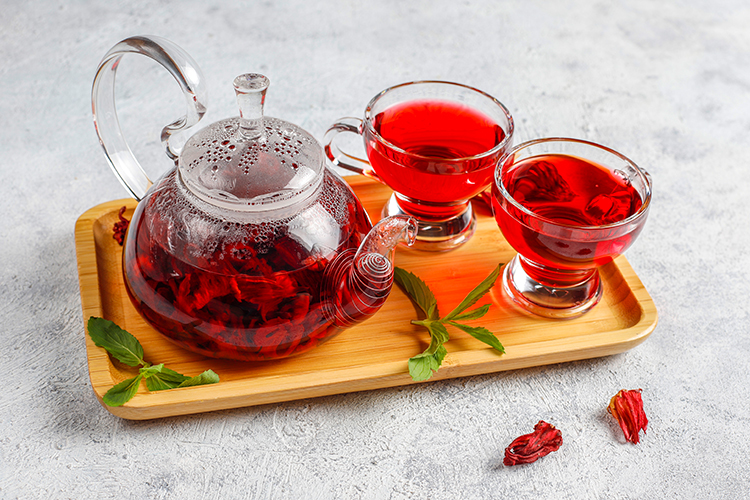
The bright red drink made from roselle (Hibiscus sabdariffa) is a special case. It’s not a tea leaf but a flower calyx, rich in vitamin C and anthocyanins.
Scientific studies confirm the benefits of hibiscus: it truly helps lower blood pressure and strengthens blood vessels. But there is one strict rule: do not boil it.
Many make the mistake of simmering the petals to achieve a deeper color.
- Extended boiling destroys the beneficial anthocyanins, and vitamin C is lost.
- The drink turns a muddy brown and loses its refined taste.
Tip
Pour hot water (90–95 °C) over hibiscus and steep it for 5–10 minutes. This way, you preserve both the ruby color and the heart-health benefits.
Mindful Tea Checklist: Final Summary
We’ve explored the physics and chemistry of the process, and now we can define a “gold standard” for brewing. It’s not a strict ritual, but a set of science-backed recommendations that guarantee a flavorful result.
- The Foundation Is Water. Your goal is soft water with moderate mineralization (50–100 mg/L). Hard tap water usually contains calcium, which blocks aroma extraction and creates an unpleasant film. If you don’t have a quality filter, use bottled water.
- Temperature Control Without Fear. Black Tea requires high temperatures (95–100 °C) for full flavor release. Green Tea needs a gentler approach (80–85 °C) to avoid bitterness. Don’t be afraid to reboil the kettle — myths about “heavy water” and microbes are pseudoscientific nonsense.
- Let the Tea Leaf Breathe. Skip the habit of brewing a strong concentrate in a tiny teapot and diluting it later. Brew the tea directly in the full volume of water. The more space the leaf has, the better the diffusion — and the richer the flavor bouquet.
- Time Management (Timing). Tea should not steep endlessly. The beneficial and flavorful compounds are released in the first 3–5 minutes. If you over-steep, tannins and chlorophyll breakdown products will dominate, creating a harsh bitterness. Tip: After 5 minutes, simply remove the strainer or pour the tea into another vessel.
- Materials and Hygiene. Don’t fear modern stainless steel — it’s chemically neutral and safe. But don’t “wrap” the teapot with a towel: it creates a sauna effect, which “stews” the tea and gives it a musty, overcooked aroma.
- The Hibiscus Rule. Remember, hibiscus is not tea. Never boil it. High temperatures destroy vitamins and ruin the color. Just pour hot water over it and let it steep.
Enjoy your tea — backed by knowledge!