Українська
  Русский
  Polski
  Deutsch
  Français
  Español
  Nederlands
  Svenska
Switzerland is one of the most fascinating countries in Europe. It is world-famous for its mountains, lakes, chocolate, and watches. But beyond the familiar stereotypes lies much more — a unique history, unusual laws, and unexpected achievements.
This country combines rich traditions and modern innovations. Four official languages coexist here in peace, alongside ancient Alpine villages and ultra-modern research centers, centuries-old democratic customs, and the most advanced technologies.
In this article, we have gathered the most interesting and little-known facts about Switzerland — they will help you see it from a new perspective and understand why this country is truly unique.
A Small Country With Astonishing Diversity
Switzerland may be small in area, but it impresses with its diversity of nature and culture. Located in the very heart of Europe, the country is famous for its picturesque Alps, pristine lakes, and cozy towns.
Switzerland has more than 1,500 lakes, so wherever you are, the nearest lake is usually no more than 16 kilometers away. It is no wonder Switzerland is called the “Water Tower of Europe”: with just about 0.4% of Europe’s land area, it holds roughly 6% of the continent’s freshwater reserves.
The country takes great care of nature — for example, as early as 2000 it banned household waste landfills, and since then all non-recyclable garbage has been sent for eco-friendly incineration with energy recovery. Thanks to this, Switzerland avoids burying waste in the soil and maintains its renowned environmental cleanliness.
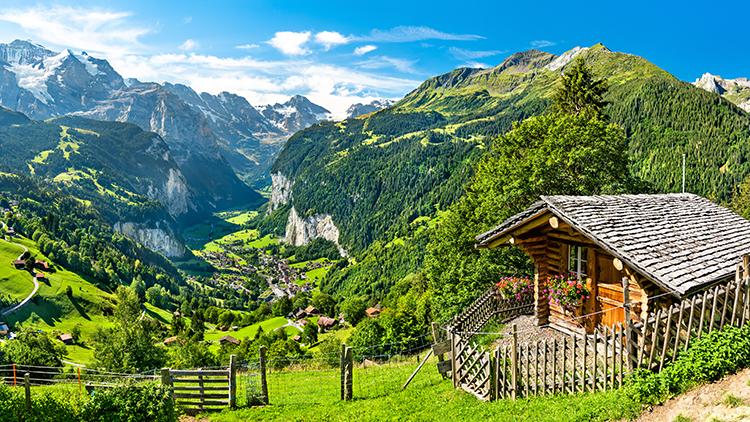
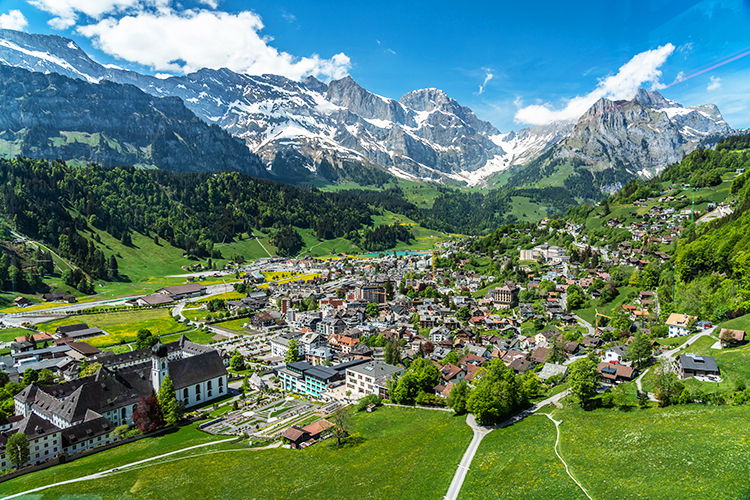
The geography of Switzerland is diverse: about 60% of the territory is occupied by the Alps — majestic mountain ranges with dozens of peaks higher than 4,000 meters. In the south, in the canton of Ticino, the climate is already close to Mediterranean — palm trees grow on the lakeshores, while in the north lie green hills and valleys. Such variety of landscapes in a small area makes Switzerland especially attractive to nature lovers and travelers.
Switzerland is also home to the longest railway tunnel in the world — the Gotthard Base Tunnel, stretching 57 km through the Alps. Opened in 2016, it became an outstanding engineering achievement, connecting northern and southern Europe with a high-speed railway.
Politics, Security, and Democracy in Switzerland
The Tradition of Neutrality
For many centuries, Switzerland has been known for its policy of permanent neutrality. The last time the Swiss army took part in a war was back in 1815, after which the country has stayed out of all international armed conflicts.
Neutrality allowed Switzerland to live through the most turbulent eras of European history peacefully, including both World Wars, and turned Geneva into a global center of diplomacy — this is where the Geneva Conventions were signed and the Red Cross was founded in 1863 by the Swiss Henry Dunant. Today, Geneva hosts the headquarters of many international organizations, from the UN and the World Health Organization to the World Trade Organization.
Army and Security
Despite its neutrality, Switzerland maintains a capable army based on compulsory military service. Interestingly, every Swiss man who has served in the army keeps his personal weapon at home, which is why the level of gun ownership in the country is one of the highest in Europe (almost 28 firearms per 100 residents). At the same time, the firearm crime rate among the Swiss is extremely low — about 0.2 homicides per 100,000 people, dozens of times lower than, for example, in the USA. The secret of this paradox lies in strict rules on storage and carrying of weapons and a culture of responsible use rooted in the tradition of a militia army.
Moreover, Switzerland has a unique safety regulation: by law, every resident is guaranteed a place in a bomb shelter in case of war. As early as the 1960s, a law was passed requiring protective shelters for the population — the only such regulation in the world providing one shelter space per person. Thanks to this, the country has tens of thousands of bunkers and shelters capable of accommodating the entire population.
Direct Democracy and Collective Governance
Switzerland’s political system deserves special attention. It is one of the few countries where direct democracy works in a modern format. Swiss citizens are called the world champions of voting — they regularly vote in referendums 3–4 times a year on a wide range of issues. Any amendment to the Constitution must be put to a nationwide vote, and citizens themselves can also initiate a referendum on any important initiative.
On average, citizens take part in about ten federal votes annually, not counting cantonal and local ones. In two cantons — Glarus and Appenzell Innerrhoden — the ancient form of popular assembly Landsgemeinde has survived to this day, when once a year all eligible citizens gather in the main square and vote by open raising of hands directly under the open sky. This tradition goes back more than 700 years and vividly demonstrates the spirit of direct popular rule.
Fun Fact
Commitment to traditions sometimes led to paradoxes — for example, the conservative canton of Appenzell Innerrhoden preserved its old order for so long that it granted women the right to vote in local elections only in 1991, becoming the last in Europe (this happened 20 years after women obtained voting rights at the federal level in Switzerland).
The country’s highest authority is organized in an equally unusual way. Switzerland has no single president — instead, it is governed by a Federal Council of seven equal members. Each year, one of them is entrusted with the role of chairperson (President of the Confederation), but formally he or she is considered only “the first among equals.”
All decisions are made collectively, which helps to avoid the concentration of power in one person’s hands. This collegial model of governance, combined with the tradition of direct democracy, ensures the stability and consensus of Swiss politics.
Wealth, Comfort, and Achievements of Switzerland
A Country of Wealthy Citizens
In terms of prosperity and development, Switzerland confidently ranks among the world leaders. For several years in a row, the country has held the 1st place in the world in the UN Human Development Index (HDI), outperforming all other states in the combined indicators of living standards.
The Swiss enjoy one of the highest life expectancies: the average lifespan reaches 83–85 years (about 85.9 for women and about 82.5 for men). High incomes and an excellent healthcare system (recognized in 2022 as the best in the world for the quality and accessibility of medical care) are key factors in this well-being.
According to the UN, the average gross income per capita in Switzerland is about 69,000 US dollars per year. The distribution of wealth is even more impressive: according to the UBS Global Wealth Report, the average net wealth of an adult Swiss citizen exceeds $700,000, the highest figure in the world. For comparison, in Luxembourg, which ranks second, this figure is about $608,000. Switzerland effectively leads the planet in average personal wealth.
Quality of Life and High Costs
Of course, life in the Confederation is not cheap — Swiss cities regularly rank among the most expensive places to live. Zurich, Geneva, and Basel consistently appear at the top of global cost-of-living rankings. Even such an unofficial indicator as the Big Mac Index shows that Switzerland has the most expensive Big Mac in the world — a kind of evidence of the high cost of living and the strong franc.
Nevertheless, the quality of life and level of comfort for residents remain outstanding. Switzerland has repeatedly been recognized as the Best Country in the World in the Best Countries ranking by U.S. News & World Report (in 2023 it once again took 1st place). The country received top scores in “Quality of Life,” “Open for Business,” and “Entrepreneurship.”
Economic success is supported by low taxes, a developed financial sector (Zurich and Geneva are major global banking centers), and high-tech industry. The country hosts major international companies — from the food giant Nestlé to pharmaceutical powerhouses (Roche, Novartis) and watchmakers (Rolex, Swatch, and others).
Leader in Innovation
Switzerland is also renowned for its achievements in science and innovation. For 13 years in a row it has held 1st place in the WIPO Global Innovation Index — longer than any other country. This reflects active adoption of new technologies, a high level of patent activity, and strong support for scientific research.
The country is home to leading technical universities such as the famous ETH Zürich (Swiss Federal Institute of Technology), which ranks among the best in the world. Per capita, Switzerland spends very large amounts on research and development, yielding tangible results in inventions and discoveries.
Railway Champions
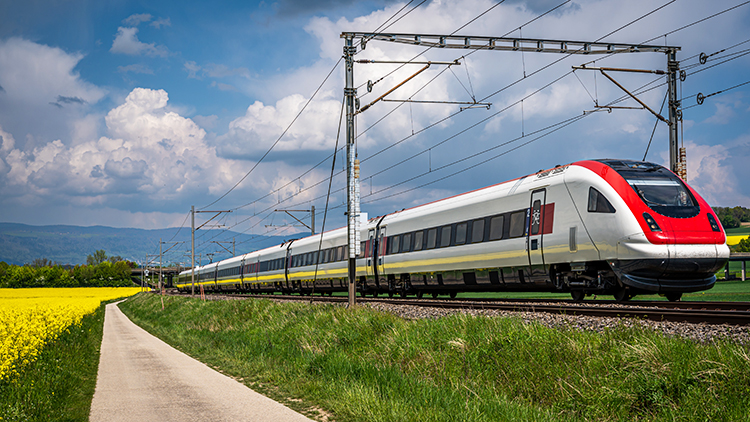
Interestingly, for such an innovative and wealthy state, Switzerland places great emphasis on public transport and transport ecology. Swiss people are Europe’s champions in train travel: in 2023 the average resident traveled 2,466 km per year and made 68 trips by rail. This is more than 50% higher than the figure of the second-ranked country in Europe (Austria).
In terms of rail journeys per capita, Switzerland also leads on a global scale, rivaled only by Japan. The rail network is incredibly dense and precise — train punctuality exceeds 93%, among the best in the world, and the trains themselves are famed for comfort.
The state railway company SBB breaks records in passenger numbers every year, continuing to attract the public with reliable timetables and convenient connections. The Swiss take pride in their railways — from historic mountain panorama expresses to ultra-modern high-speed tunnels cut through the Alps.
All of this is part of the Swiss philosophy of quality of life: public transport should be so good that people truly want to use it everywhere.
Culture, Traditions, and Everyday Life
Multilingualism and Cultural Diversity
Despite its small size, Switzerland is extraordinarily diverse culturally. It has four official languages:
- German (spoken by about 60% of the population);
- French (about 20%);
- Italian (8%);
- Romansh (~0.5%, mainly in the mountain areas of Graubünden).
The Swiss carefully preserve the languages and cultures of their different regions (cantons) while remaining united in a national identity. Many residents speak several languages fluently, which often amazes visitors.
Interestingly, the country’s capital — Bern — is modestly Swiss: while it is the political center, it does not stand out in size or global influence compared with cities like Zurich or Geneva. In fact, Bern is called the “Federal City” rather than holding an official “capital” status, underscoring the country’s decentralized character.
Cultural and Scientific Achievements
Switzerland has given the world many cultural and scientific accomplishments. The International Committee of the Red Cross, as noted above, was founded here and is still led exclusively by Swiss citizens, continuing its humanitarian mission worldwide.
The Swiss Army Knife — the legendary multi-tool folding knife — has become synonymous with reliability and ingenuity, and its bright red body with a cross is recognized everywhere.
Among inventions created in Switzerland are milk chocolate (its recipe was devised in 1875 by the Swiss Daniel Peter, who added condensed milk to cocoa), cheese fondue as a national dish, hook-and-loop fastener (known as Velcro), invented by engineer Georges de Mestral in the 1940s, and even Birchermüesli (the first recipe for this breakfast was developed by Swiss doctor Maximilian Bircher-Benner around 1900).
In the laboratory of the Swiss company Sandoz in 1938, chemist Albert Hofmann synthesized LSD (lysergic acid diethylamide), and slightly earlier, in the 1930s, Swiss engineers created aluminum foil and cellophane for food packaging. It’s hard to imagine, but even modern everyday life has not done without Swiss ingenuity!
Swiss Chocolate and Cheese
Of course, when speaking about Switzerland, one cannot fail to mention chocolate. Swiss chocolate is rightly considered among the best in the world, and the Swiss themselves are its greatest connoisseurs. Switzerland ranks first in the world for chocolate consumption: the average resident eats about 8.8 kg of chocolate per year. This is more than in any other country (the nearest follower is Austria at ~8.1 kg per person).
Passion is backed by tradition: the Swiss invented many types of chocolate — for example, white chocolate and the technique of conching (kneading chocolate mass), developed by Rodolphe Lindt in the late 19th century to achieve a melt-in-the-mouth texture.
Switzerland is also famous for its cheeses — Gruyère, Emmental, Appenzeller, and many other varieties are cherished by gourmets everywhere. It is no surprise that the national Swiss dish is fondue — melted cheese with wine, into which bread is dipped. It is a symbol of togetherness and hospitality: friends and family gather around a shared pot of cheese, perfectly reflecting the cohesion of Swiss society.

Animal Welfare
A distinctive feature of Switzerland is concern for the well-being not only of people but also of animals. Some of the world’s most progressive animal protection laws are in force here.
For example, it is forbidden to keep social animals alone: guinea pigs, parrots, canaries, goldfish, and a number of other animals must, by law, have the “company” of their own kind so they do not suffer from loneliness. Switzerland even has “guinea pig rental” — a service for owners whose second guinea pig has died and the remaining one cannot be left without a companion. Keeping several hamsters, however, is not advised — they are solitary animals and are recommended to be kept one per cage.
The country also strictly regulates cage size and setup, dog walking, and more. These seemingly quirky rules actually demonstrate the Swiss’ humane attitude toward our “smaller brethren.”
Punctuality and Respect for Order
Finally, it is worth mentioning Swiss punctuality and order, which are famous worldwide. Trains depart strictly on schedule, banks run without disruptions, and city streets are remarkably clean.
The Swiss display a high level of civic responsibility: it is customary to sort waste, respect quiet hours, and follow rules strictly.
For example, most regions observe quiet hours — at night from 22:00 to 6:00 (sometimes until 7:00), as well as at lunchtime (roughly from 12:00 to 13:00). Noisy activities are prohibited at these times: renovation work using drills or impact tools, vacuum cleaning, using a washing machine or tumble dryer, mowing lawns, noisy household tasks, loud music, and more. Sundays and public holidays are subject to especially strict quiet rules.
All of this creates the image of a country where stability, order, and respect for neighbors are part of everyday life.